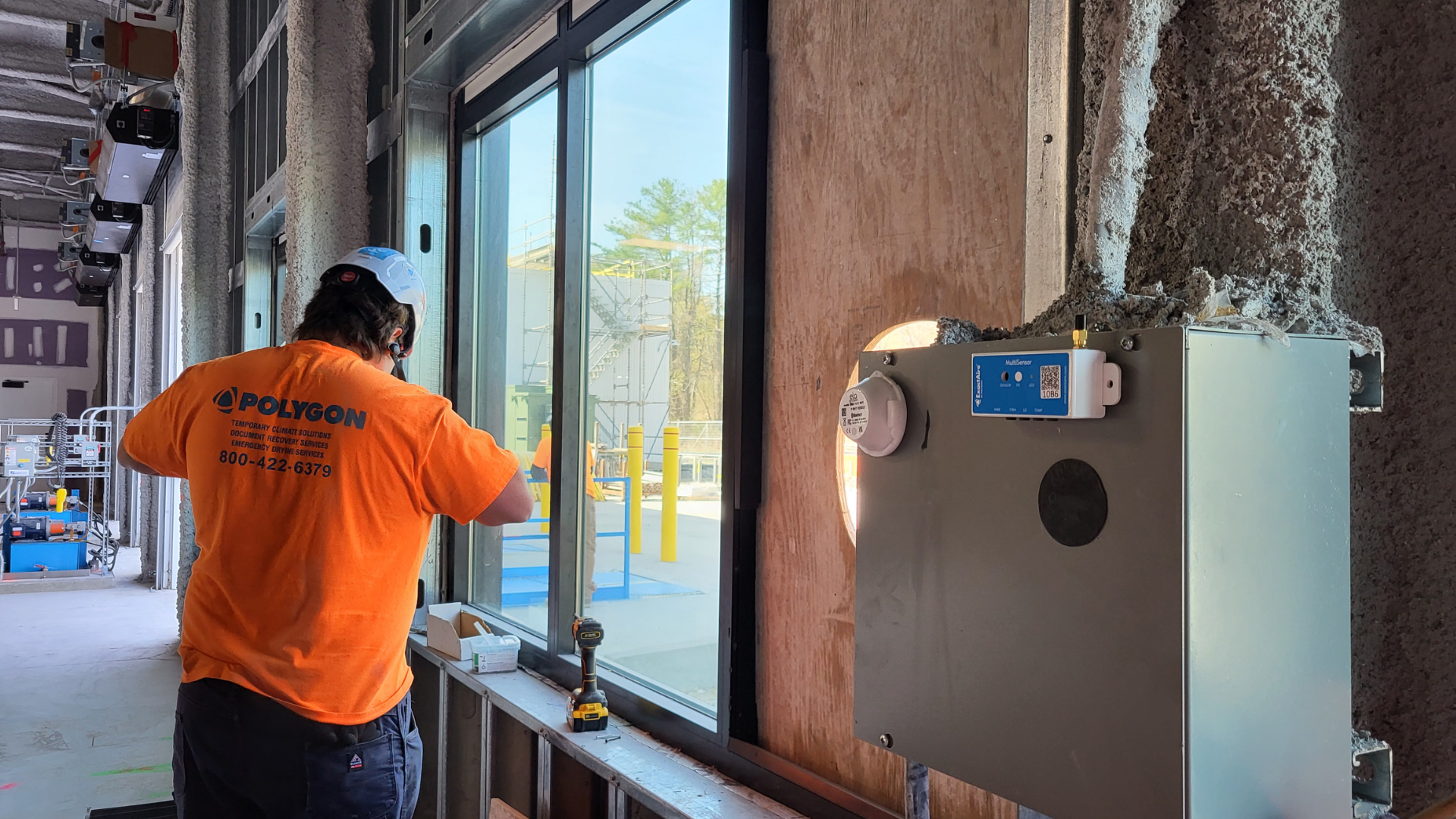
This guide outlines 10 common climate control mistakes in construction and how to avoid them. From equipment selection to budgeting, these issues can impact project timelines, material integrity, and worker safety. Learn how to manage climate control effectively to keep your project on track and within budget.
- Using the House System instead of Temporary Equipment
- Climate Spec is Undefined, Incorrect, or Incomplete
- Wrong or Undersized Equipment
- Not Enough Budget
- No Budget
- Overlooking Creature Comfort and Worker Safety
- Tight or Changing Available Space
- Failing to minimize human interventions
- Outbreak of Microbial Growth
- Sudden Pipe Leaks, Water Intrusions, Flood/Weather Events
1. Using the House System instead of Temporary Equipment
Potential Pitfall:
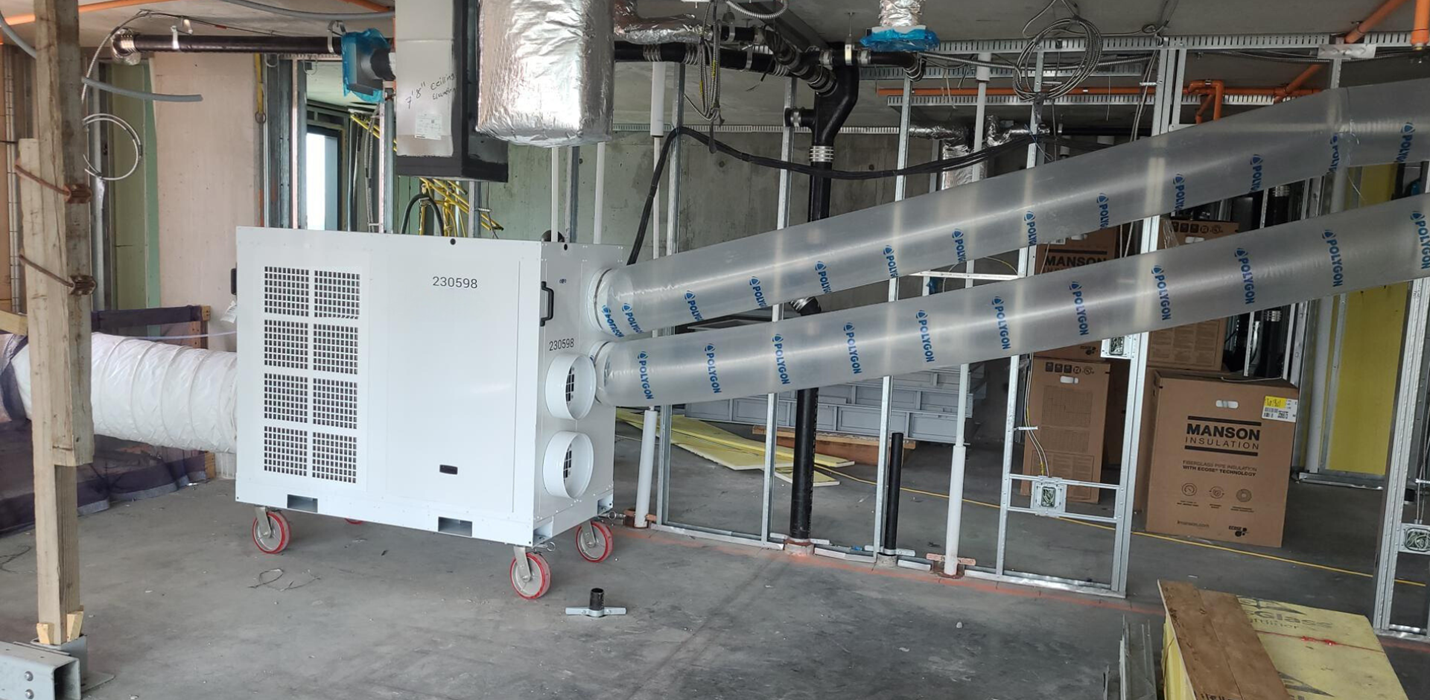
Using permanent HVAC systems during construction increases wear and tear and could void warranties, pose health risks, and raise costs. These systems aren't designed for construction dust, reducing lifespan and efficiency. Operating them before occupancy could shorten or void warranties, while accumulated dust lowers air quality and health. Temporary systems can save over $6,000 monthly in operating costs compared to permanent systems in a 70,000 sq. ft. building.
Our Advice:
Back to top
2. Climate Spec is Undefined, Incorrect, or Incomplete
Potential Pitfall:
An undefined, incorrect, or incomplete climate specification can result in unsuitable conditions for construction materials and processes. This can lead to issues such as improper curing of concrete, paint failures, and compromised material integrity.
Our Advice:
- Collaborate with climate control experts to develop a comprehensive climate specification for each project.
- Monitor and adjust climate control systems regularly to meet these specifications. Use real-time monitoring tools to continuously track conditions and make necessary adjustments to maintain optimal environments.
- Define precise temperature and humidity requirements for each phase of construction.
- Establish clear environmental parameters for critical activities like curing, painting, and material storage.
Back to top
3. Wrong or Undersized Equipment
Potential Pitfall:
Using incorrect or undersized equipment can lead to inefficient climate control, impacting project timelines and quality. A common misstep is to use heat to control humidity in the air when dehumidification is most effective. This can result in improper curing of materials and other issues that compromise construction integrity. Additionally, switching to the correct equipment later will incur more costs and inconvenience.
Our Advice:
- Conduct a thorough assessment of the site's climate control needs before implementing a climate control solution.
- Focus on what conditions you want to produce and why versus what equipment you think is needed.
- Consult with climate control experts to ensure the best technical solution is chosen for the specific requirements of the project.
Back to top
4. Not Enough Budget
Potential Pitfall:
Not enough budget might be a result of the estimating team carrying over the budget from a previous project, an oversight on the power and fuel costs, or something else. Limited funds may restrict investing in high-quality climate control. Cheaper, less efficient equipment can lead to higher operational costs. Poor climate control may cause project delays and increased costs due to damaged materials or poor workmanship
Our Advice:
- Prioritize areas where climate control is most critical and move equipment and sensors as key areas progress to avoid significant losses.
- Consider using the existing budget for technology to monitor conditions to anticipate potential issues and use the remaining budget to target those issues should they arise.
- Implement energy-efficient solutions that lower operational costs and maximize the value of the investment.
- If limited funds are a result of the estimating team applying the budget from a previous project to this one, explain how this project is different and seek to obtain additional budget.
- Run a high-level calculation of the total cost of climate management for the duration of the project and share that with stakeholders alongside potential risks to schedules, personnel, and craftsmanship. Include fuel consumption and labor costs associated with alternatives.
Back to top
5. No Budget
Potential Pitfall:
Projects without a budget for climate control may face delays and compromised quality, risking interruptions from extreme weather conditions and potential harm to workers. This can lead to costly repairs and legal or medical expenses.
Our advice:
- Use natural ventilation and shading techniques to manage indoor climate as much as possible.
- Leverage temporary solutions like fans, portable heaters, or coolers borrowed or rented at minimal cost.
- Engage higher-ups early to discuss the necessity of climate control and potentially reallocate the budget.
- Run a high-level calculation of the total cost of climate management for the duration of the project and share that with stakeholders alongside potential risks to schedule, personnel, and craftsmanship. Include fuel consumption and labor costs associated with alternatives
- Highlight the long-term cost savings and quality benefits of proper climate control to justify the need for budget adjustments.
- Device a plan of action should serious issues arise because of not implementing a proper solution (i.e. budget an extended schedule, identify which warranties might be at risk, and be ready with rental gear to band-aid a problem).
Back to top
6. Overlooking Creature Comfort and Worker Safety
Potential Pitfall:
Uncontrolled temperature and humidity can lead to uncomfortable or unsafe working conditions, causing subcontractors to delay installation work. Poor indoor air quality because of dust, pollution, and chemicals, can negatively affect worker health and productivity. This can disrupt project timelines and increase labor costs.
Our Advice:
- Install temporary HVAC systems that can be easily adjusted to meet the needs of different phases of the project.
- Ensure air quality, temperatures, and humidity levels are suitable for both workers and materials. Monitor and control the environment to maintain consistent conditions that are comfortable for workers and ideal for material application.
- Create a comfortable environment to keep subcontractors on schedule and prevent delays.
- Provide well-ventilated and climate-controlled areas to boost productivity and adherence to schedules.
Back to top
7. Tight or Changing Available Space
Potential Pitfall:
Limited space can make it difficult to install and operate climate control equipment effectively. Construction sites often have evolving layouts, necessitating flexible and adaptable climate control solutions.
Our Advice:
- Use compact, or portable climate control units that can be easily moved and adjusted.
- Plan the layout of the climate control system early in the project to integrate with the construction phases.
- Regularly communicate with the project team to anticipate changes and adjust the climate control setup proactively.
Back to top
8. Failing to minimize human interventions
Potential Pitfall:
A busy and chaotic job site might include workers who leave doors and windows open, unplug equipment, or relocate sensors. This can disrupt climate control and slow progress.
Our Advice:
- Implement strict protocols and training for site workers to minimize human error.
- Post signage on spaces that are being conditioned.
- Use automated climate control systems that require minimal human intervention.
- Regularly monitor the site to ensure compliance with climate control protocols and address any issues promptly.
- Use tamper-proof covers or locks on essential equipment to prevent accidental interference.
- Educate the project team on climate control basics and why you are conditioning the space. Bring climate control into daily standup conversations. Make data available on a dashboard in the trailer or community space.
Back to top
9. Outbreak of Microbial Growth
Potential Pitfall:
Construction sites are often exposed to moisture, creating ideal conditions for microbial growth, including mold and mildew. This poses health risks and can compromise structural integrity and lead to costly remediation efforts.
Our Advice:
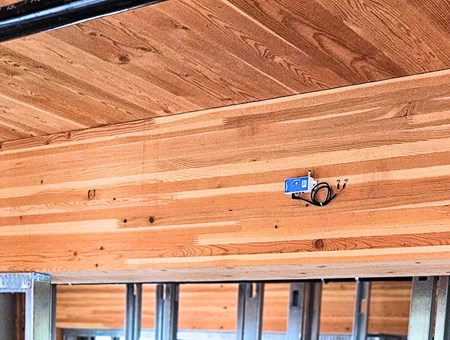
- Implement robust climate control measures to manage humidity levels. Use humidity tracking sensors in connection with climate control equipment to keep relative humidity and temperature with a preset threshold.
- Use dehumidifiers and proper ventilation to ensure proper air circulation throughout the site to minimize moisture accumulation.
- Regularly inspect the site for signs of microbial growth. Conduct frequent site inspections focusing on high-risk areas, such as basements and enclosed spaces.
- Address any issues immediately to prevent the spread. Take swift action to remediate any detected mold or mildew, including professional cleaning and drying treatments.
Back to top
10. Sudden Pipe Leaks, Water Intrusions, Flood/Weather Events
Potential Pitfall:
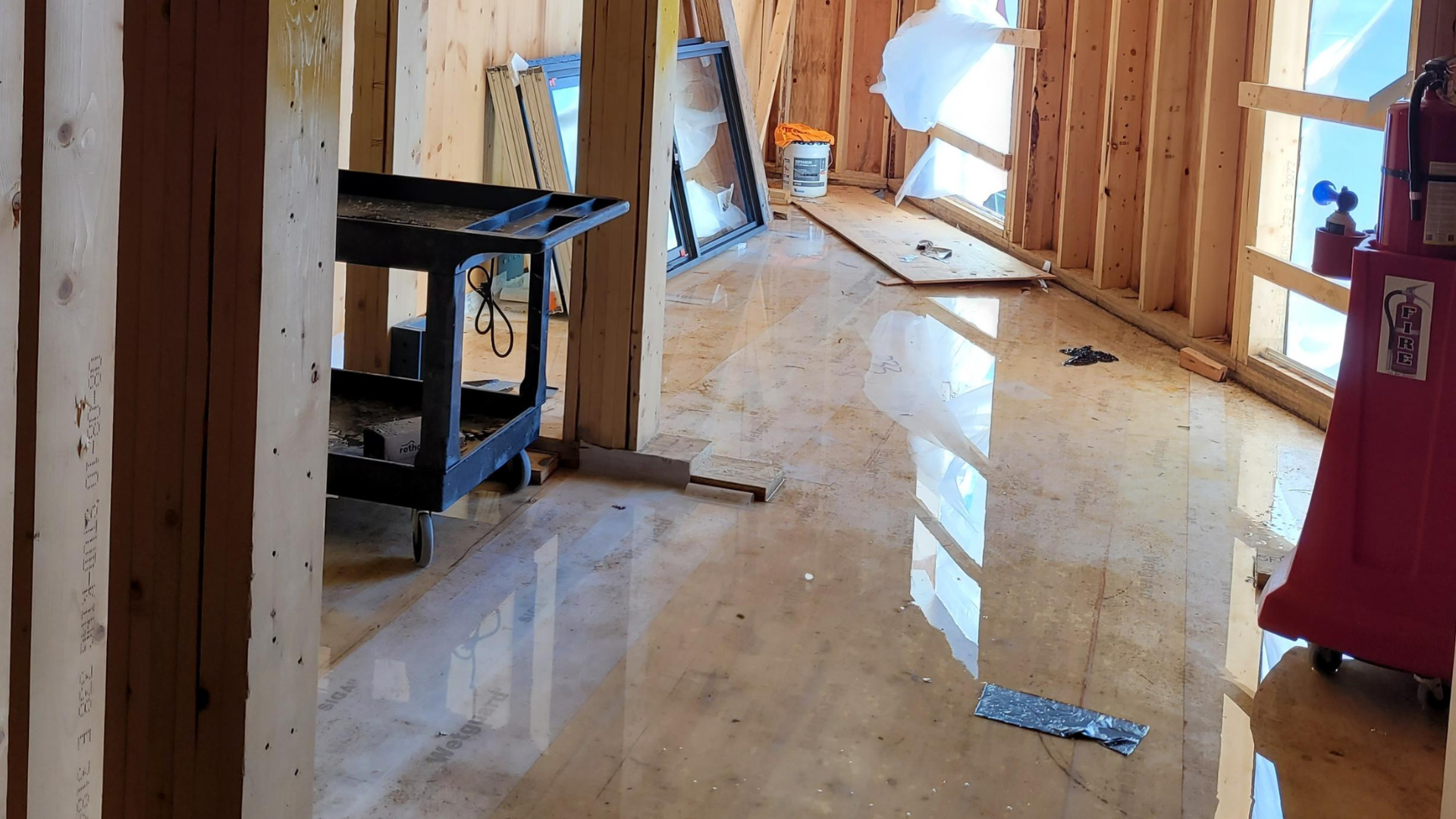
Water can cause significant damage and disruption to a construction project. Water intrusion accounts for nearly one-third of general contractors' risk losses, with commercial buildings particularly vulnerable. Sources include faulty pipes, rainfall, and other weather events like floods. Excessive moisture and exposure to water can compromise the structural integrity of materials like wood, drywall, and insulation, creating an unsafe working environment and potentially halting construction activities. Smaller amounts that go undetected can cause damage later on in the form of rot and mold and poor indoor air quality for occupants.
Our Advice:
- Identify sources through the job site to understand your highest-risk areas
- Implement real-time devices such as leak detection sensors, flow monitoring, and control technology to know when potential issues might occur. Technology like this can sometimes reduce builders' risk insurance premiums
- If an event does occur, call an experienced service provider to conduct emergency drying to minimize the damage and salvage as much as possible. Often drying construction materials in place is faster, cheaper, and more sustainable than demolition and rebuilding.
Back to top