Notice
You are now leaving Polygon Restoration's website and will be directed to another country in the group.
Do you want to proceed?
Notice
You are now leaving Polygon Restoration's website and will be directed to another country in the group.
Do you want to proceed?
Every generation must navigate technology shifts. Some of us remember the change from typewriters to computer keyboards. Others grew up with landlines but now wield cell phones. Disaster recovery services and the companies we serve face a similar technological shift, from hard copies of important papers to electronic documents. At this point, it is clear that electronic medical records (EMR) will dominate tomorrow’s health world. Here are a few advantages to storing health records electronically, whether in the internet cloud or on remote hard drives:
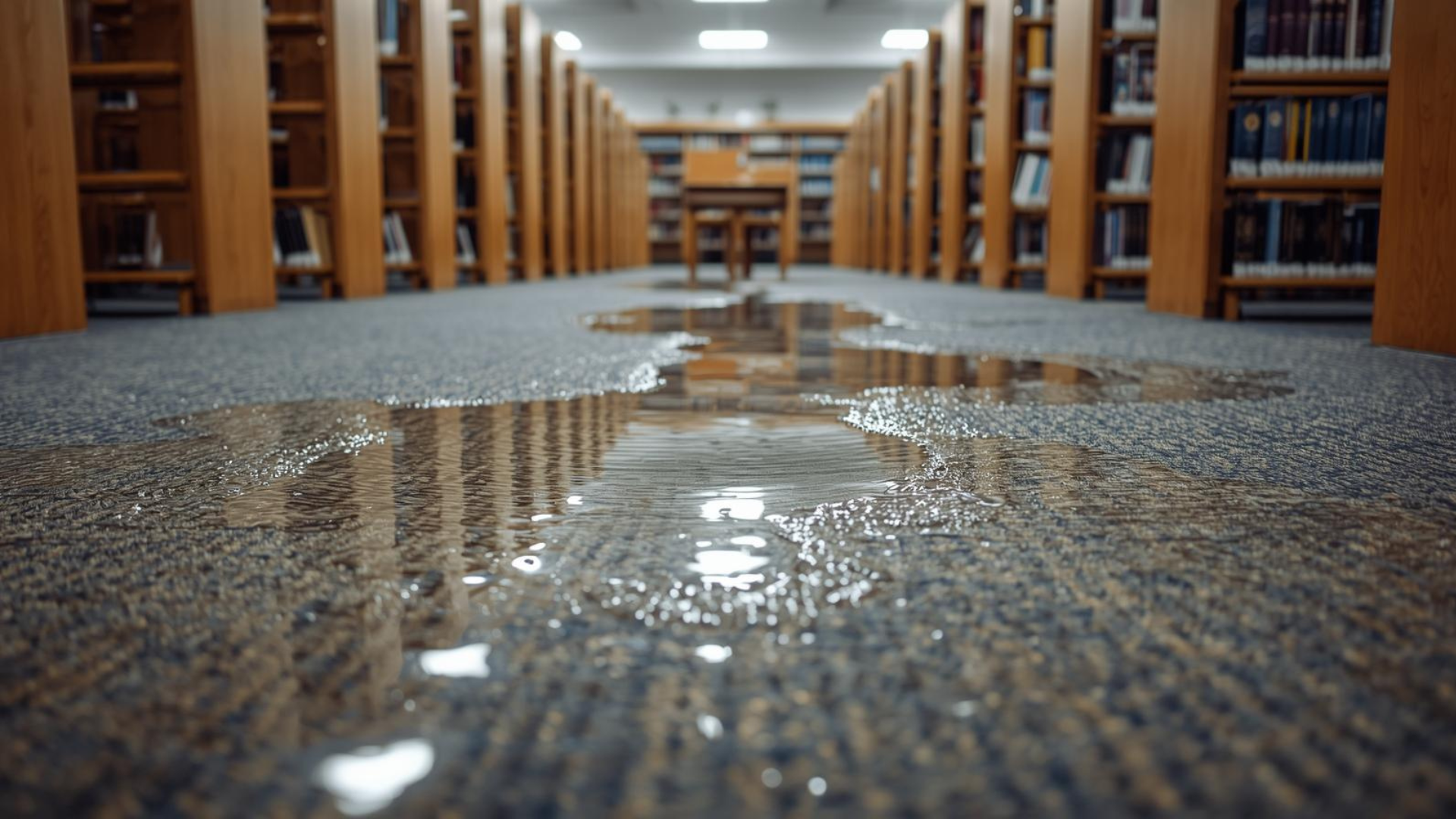
Because health records such as X-rays are often irreplaceable, many hospitals keep them on upper stories to avoid the possibility of flooding. Even with such precautions, health facilities may end up with wet documents on their hands – a minor fire could set off the sprinkler system, for instance. When an X-ray becomes wet, two things happen: water stains begin to form on the film, and the emulsion softens and adheres to whatever it’s touching, which could be another X-ray, a medical document or the jacket.
The most advanced hospitals are moving toward digitally savvy systems in which important documents are scanned into a shared system. However, this approach is cost-prohibitive for many smaller, rural health centers. In such instances, disaster recovery systems can step in to restore wet documents.
Another advantage of storing health records electronically is that such a system is safe from fires. Of course, system administrators must ensure that data servers are located off-site, so a ripping inferno doesn’t burn through servers as well as hard copies. Indeed, backup servers should be located in a different geographical zone altogether so as to render a city- or region-wide disaster harmless. Beyond the dramatic effect of fire, medical records are liable to become damaged over time simply by dint of everyday handling. EMR systems solve both problems.
Many health professionals eagerly await the broad adoption of EMR approaches. Such doctors, nurses and administrative professionals recognize that electronically stored health records will be far easier to access on the fly, in the face of time-sensitive medical situations. Rather than sending a colleague to fetch paper documents, health professionals will simply search for requisite records on mobile devices connected wirelessly to the hospital’s EMR system. Furthermore, health facilities will find themselves blessed with extra usable space when they clear out the clunky filing cabinets that previously stored patients’ health records.
As you can see, EMR adoption is on the horizon. However, until every health facility has converted to electronic storage solutions, disaster recovery services such as Polygon can help hospitals, nursing homes and other health facilities protect against and recover from flooding and other disasters. Whether or not your health center has an EMR system, wet documents don’t have to mean the loss of critical patient data.

Emergency Support
1-800-422-6379Send an email
us_info@polygongroup.com24/7 Hotline
Urgent equipment and operational support
Property damage
Documents and contents damage
24/7 Emergency:
United States: 1-800-422-6379
Canada: 1-888-702-4782
Your questions and comments are important to us. Please send us your information with a description of your needs and we will connect with you promptly.
Polygon US Headquarters
15 Sharpners Pond Road, Building F North Andover, MA 01845
Phone: 1-800-422-6379
See all our US locations here: Polygon US office locations
For global support, please contact one of our offices listed here: Our Global offices - Polygon Group