Notice
You are now leaving Polygon Restoration's website and will be directed to another country in the group.
Do you want to proceed?
Notice
You are now leaving Polygon Restoration's website and will be directed to another country in the group.
Do you want to proceed?
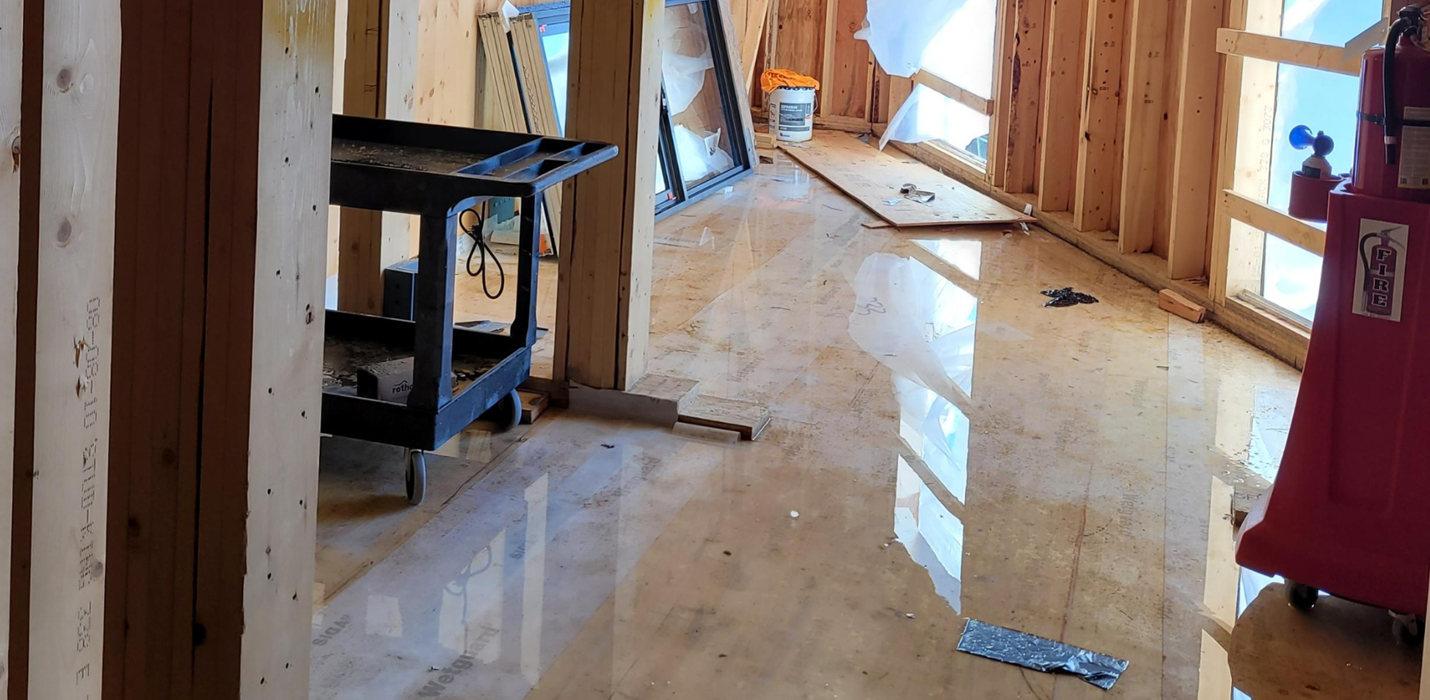
Project managers already facing tight timelines know how quickly moisture problems can derail progress. A single storm system or prolonged period of humidity can slow drying times, damage materials, and push critical installations further down the schedule. Understanding these risks and managing them early is key to keeping projects on track.
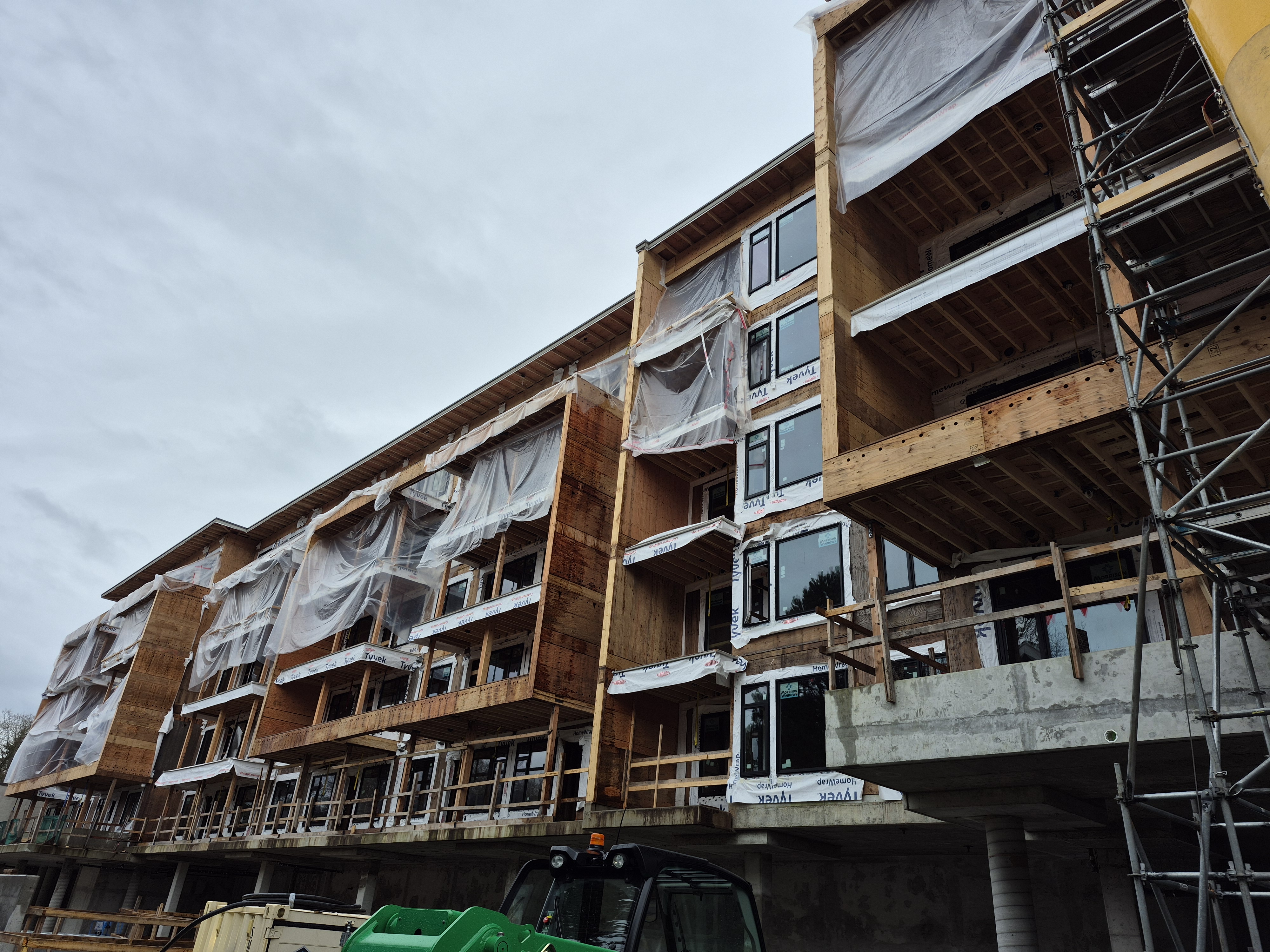
Construction projects are especially vulnerable to environmental conditions because buildings are often partially enclosed while materials are already installed.
Weather-driven moisture can impact a project in several ways:
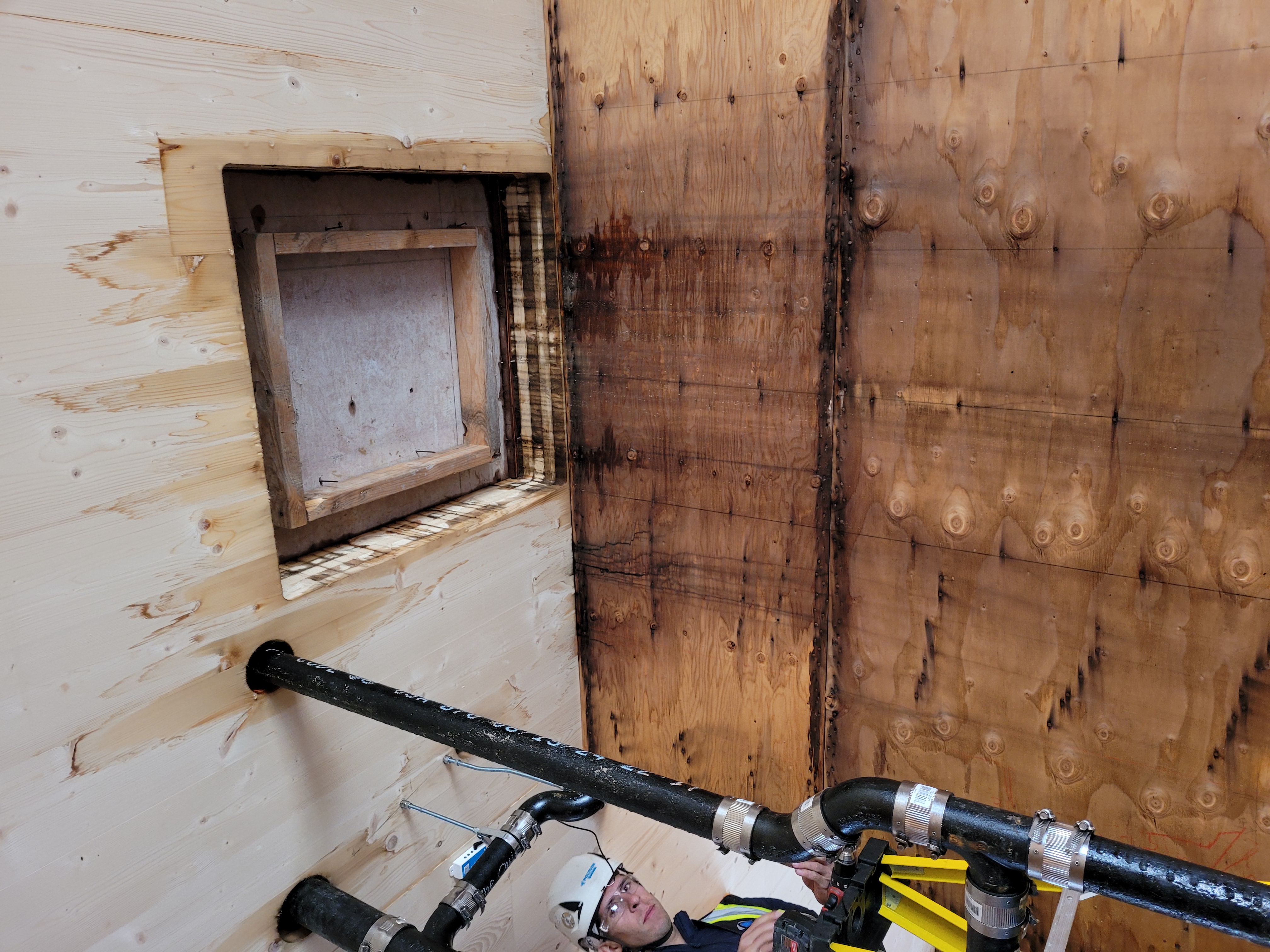
Modern construction materials and high-performance building systems are more sensitive to environmental conditions than ever before. Even if moisture damage isn’t immediately visible, hidden moisture can lead to expensive rework later in the project.
For example:
Learn about more examples here.These issues often surface late in the construction timeline, when delays are most costly or later during occupancy as a warranty issue.
While contractors can’t control the weather, they can control jobsite environmental conditions.
Many project teams now manage moisture risk by:

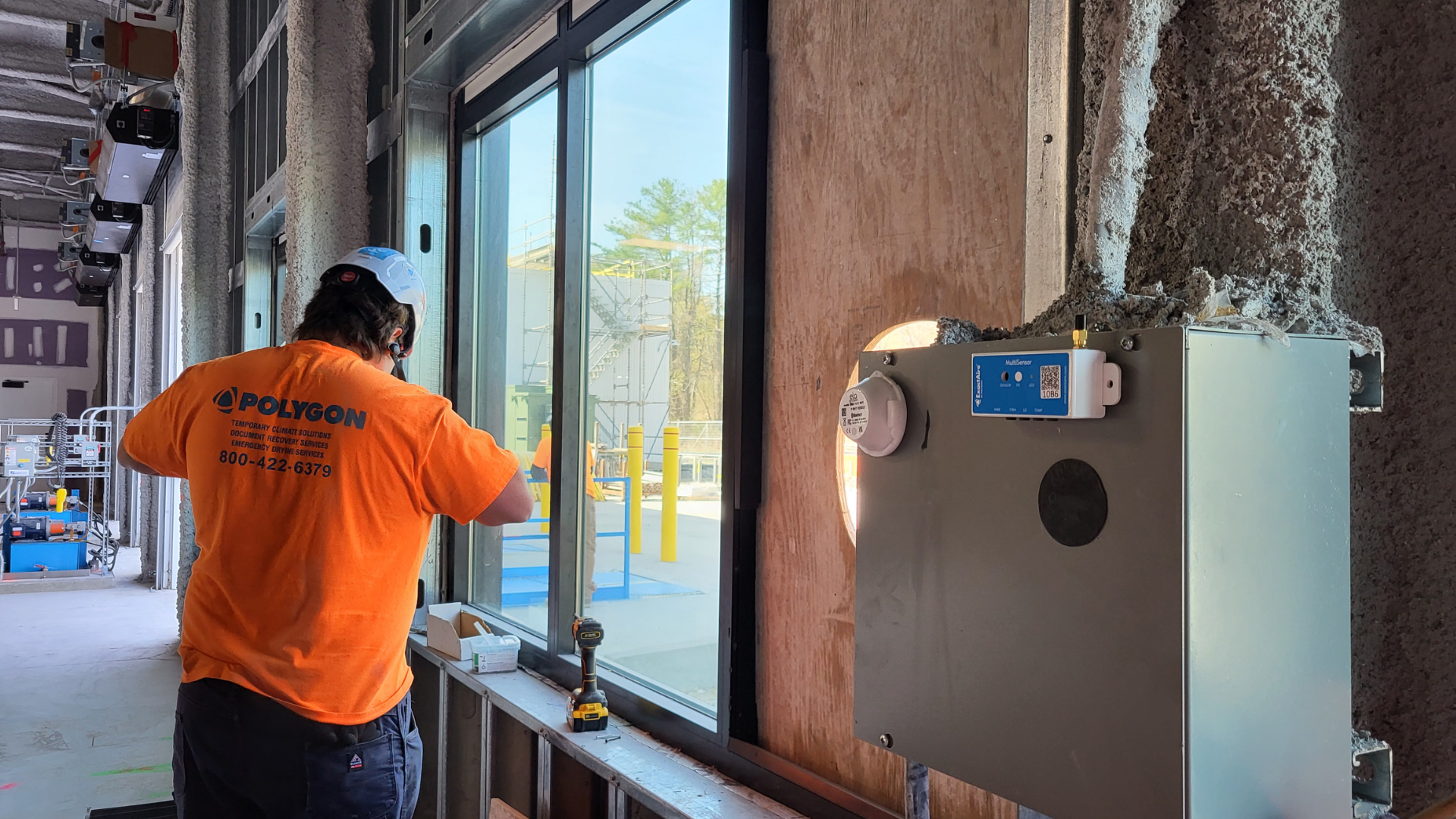
Continuous monitoring allows teams to confirm when materials meet specifications without relying solely on manual spot checks, helping them move forward with confidence and avoid unnecessary delays.
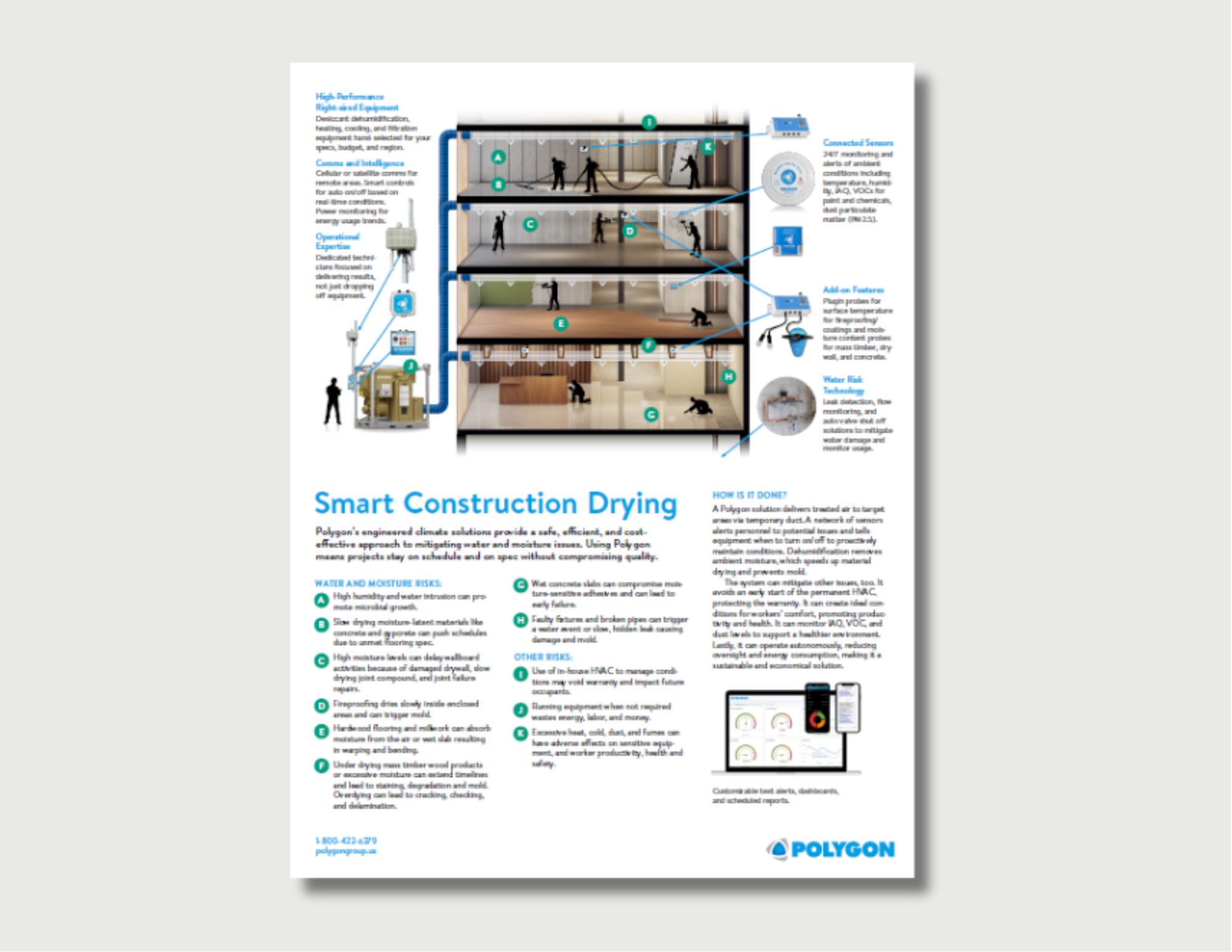
Download Polygon's Smart Construction Drying PDF to explore the sensors and technology used to accelerate schedules and mitigate moisture risk.
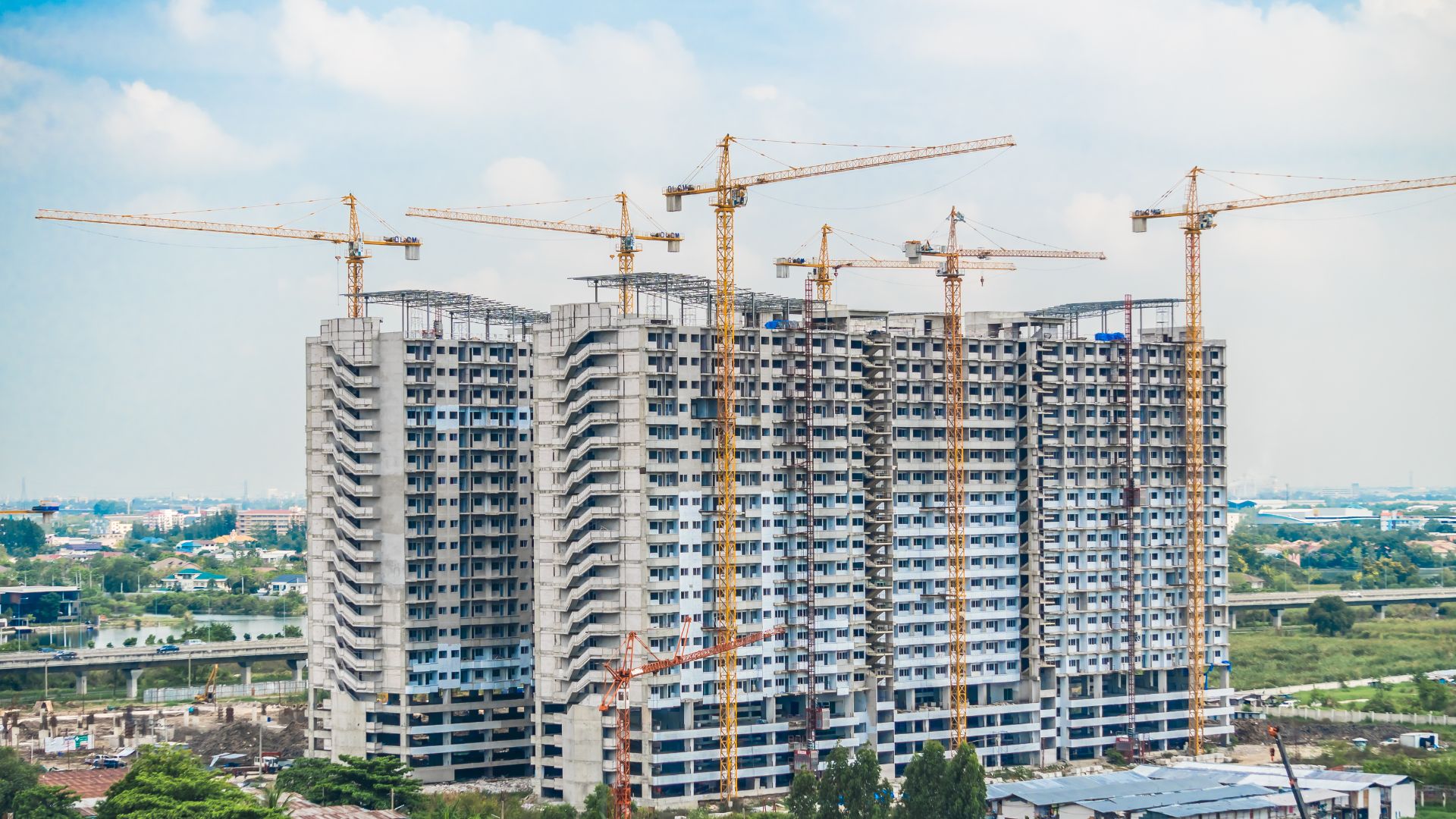
Extreme weather events are becoming more common, and construction schedules are increasingly vulnerable to environmental disruptions.
For project managers trying to stay on schedule or recover from delays, managing moisture risk isn’t just about protecting materials. It’s about maintaining momentum across the entire project timeline.
With the right visibility into environmental conditions, teams can make informed decisions about drying, installation timing, and climate control, keeping projects moving even when the weather doesn’t cooperate.
For more information on moisture risk and more advice on jobsite climate control, visit The Ultimate Toolkit, designed for project teams.
Date: March 18, 2026

Emergency Support
1-800-422-6379Send an email
us_info@polygongroup.com24/7 Hotline
Urgent equipment and operational support
Property damage
Documents and contents damage
24/7 Emergency:
United States: 1-800-422-6379
Canada: 1-888-702-4782
Your questions and comments are important to us. Please send us your information with a description of your needs and we will connect with you promptly.
Polygon US Headquarters
15 Sharpners Pond Road, Building F North Andover, MA 01845
Phone: 1-800-422-6379
See all our US locations here: Polygon US office locations
For global support, please contact one of our offices listed here: Our Global offices - Polygon Group