Notice
You are now leaving Polygon Restoration's website and will be directed to another country in the group.
Do you want to proceed?
Notice
You are now leaving Polygon Restoration's website and will be directed to another country in the group.
Do you want to proceed?
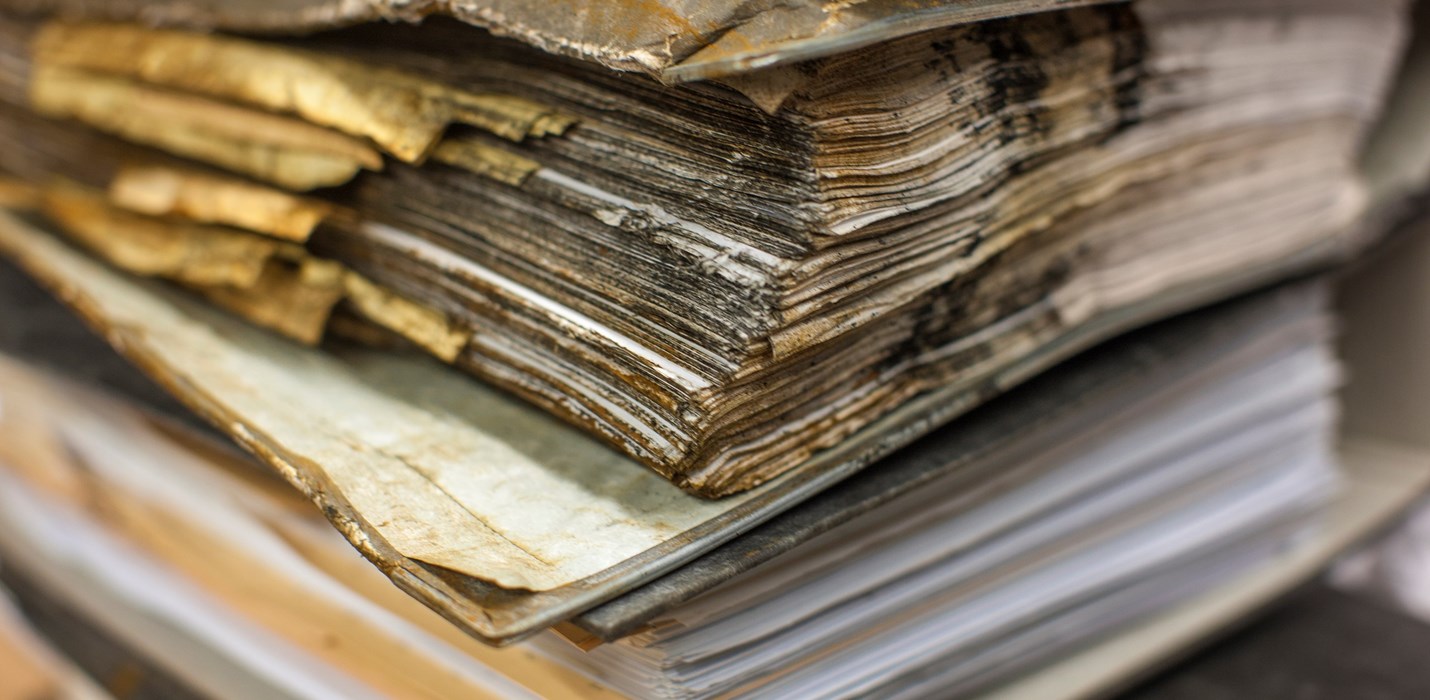
In everyday life, the public uses high-efficiency particulate arresting (HEPA) vacuums for their homes to reduce the number of allergens and irritants in the environment and improve the quality of air. In the document restoration world, professionals use them to clean documents damaged by water, mold, smoke, pollutants and other debris. At Polygon, the use of this advanced technology not only safely cleans damaged documents, it also helps remove some odors and prevents further damage.
How HEPA Vacuums Work
When professionals talk about HEPA vacuums, they refer to the type of filter used within them. Generally made of fiberglass, the fibers that make up a HEPA filter are between 0.5 and 2.0 micrometers thick (one micrometer is one thousandth of a millimeter) and arranged in a random fashion. A HEPA filter’s design causes the fibers to trap the particulates in different manners, including:
In addition to the filter’s design, the effectiveness of a HEPA filter depends on a vacuum’s air speed. While HEPA filters trap odor-causing bacteria and particulates, they do not filter odor molecules or gasses.
The Effectiveness of HEPA Filters in Document Restoration
Professionals use HEPA filters for applications such as abating lead, asbestos and nuclear contamination; isolation units in health care facilities; surgical facilities; clean rooms; and rooms where manufactures make computer components. HEPA filters are so effective at trapping small particles that they are the only type of air filtration system that the U.S. Federal Emergency Management agency recommends in the event of a biological attack.
When restoration professionals use vacuums with HEPA filters to clean documents, the vacuums suck up mold spores, soot, dirt and bacteria. The filter traps the particles, which the vacuum’s canister contains within it. Since applying a vacuum nozzle to a document may damage it, professionals use items like screens and special vacuum attachments with brushes to protect the materials.
Because specialists only use HEPA vacuums when documents are dry, the bacteria and inactive mold spores that they collect do not breed or grow within the filter. The dry environment causes such particulates to die from a lack of moisture.
The document restoration techniques at Polygon always involve dry cleaning processes that include the use of cloths, sponges, brushes, erasers and vacuums. Our specialists use the most effective techniques for the type of document in question on-site or at a secure facility that prevent warping, distortion or other types of damage. If you need document restoration services, time is of the essence. Call Polygon right away to begin the restoration process.
[Photo from Marcin Wichary via CC License 2.0]

Emergency Support
1-800-422-6379Send an email
us_info@polygongroup.com24/7 Hotline
Urgent equipment and operational support
Property damage
Documents and contents damage
24/7 Emergency:
United States: 1-800-422-6379
Canada: 1-888-702-4782
Your questions and comments are important to us. Please send us your information with a description of your needs and we will connect with you promptly.
Polygon US Headquarters
15 Sharpners Pond Road, Building F North Andover, MA 01845
Phone: 1-800-422-6379
See all our US locations here: Polygon US office locations
For global support, please contact one of our offices listed here: Our Global offices - Polygon Group