Notice
You are now leaving Polygon Restoration's website and will be directed to another country in the group.
Do you want to proceed?
Notice
You are now leaving Polygon Restoration's website and will be directed to another country in the group.
Do you want to proceed?
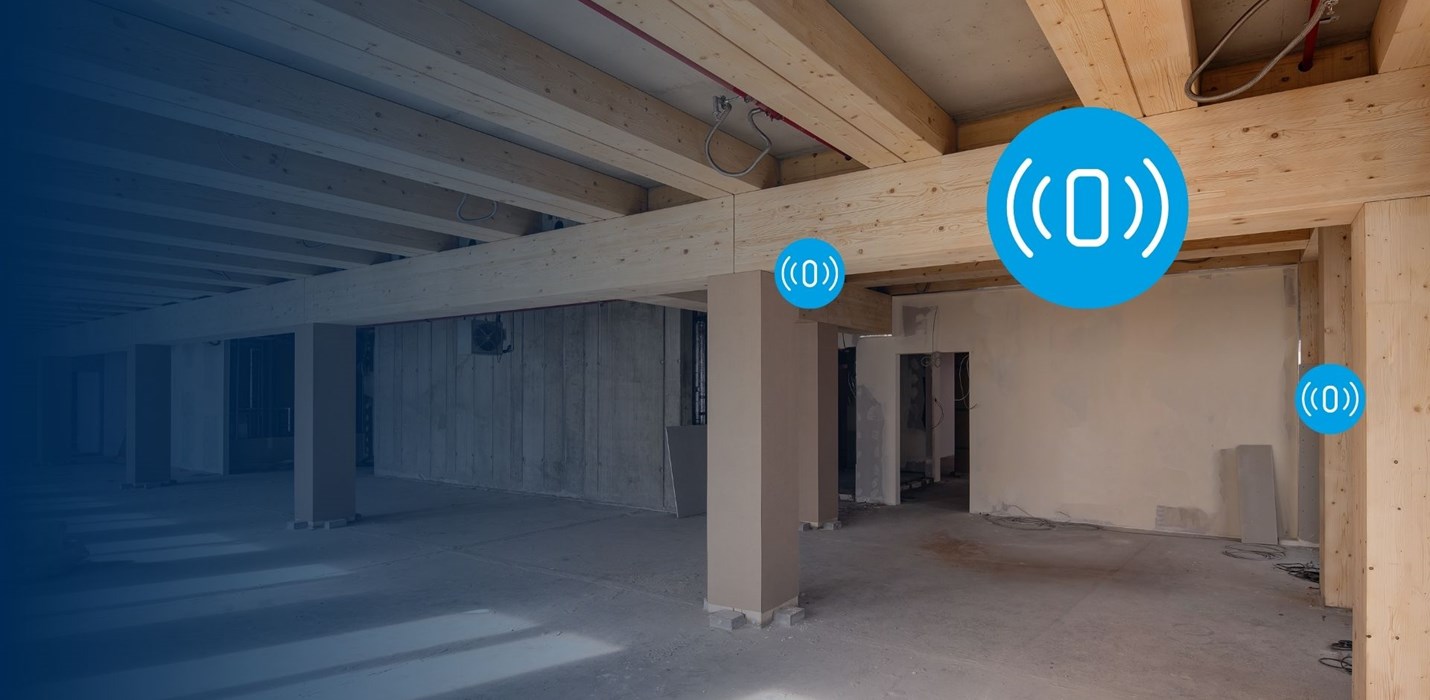
Wood and mass timber construction have gained significant traction in recent years due to their sustainability, aesthetic appeal, and structural versatility. However, these building materials come with unique challenges, particularly concerning moisture management and wood moisture content.
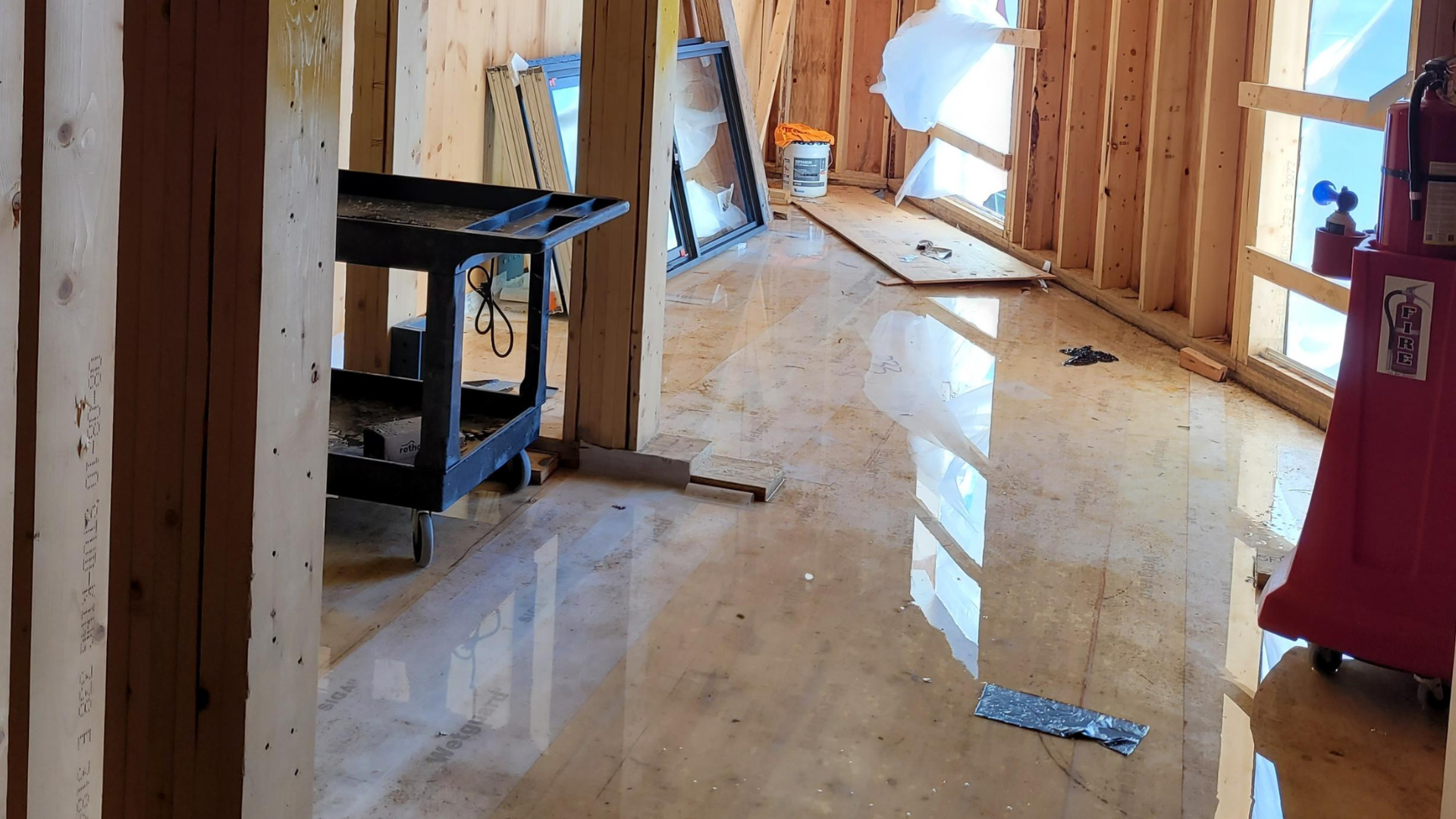
Mass timber manufacturers work hard to control wood moisture content during fabrication. Once mass timber components get to the job site, atmospheric conditions start to affect the timber materials. Wood components can take on ambient moisture or pick up moisture from rain or other bulk water sources.
Vapor pressure is a fundamental concept of moisture management in wood and mass timber construction. This pressure refers to the force exerted by water molecules in the air as they transition between the liquid and vapor states. If the atmosphere around the materials has a higher relative humidity, then vapor will migrate into the wood materials. This is influenced by factors such as temperature, relative humidity, the presence of moisture-laden materials within the construction space, and atmospheric water “events”.
Mismanagement of moisture conditions in wood and mass timber can lead to serious consequences, including structural damage and mold growth, due to its organic nature. Long-term or persistent exposure to moisture can infiltrate deeply into the components, connections, and assemblies of the wood and mass timber, leading to swelling and shrinking. Additionally, remediation of mold can prove to be costly and time-consuming. Therefore, effectively managing vapor pressure is essential for ensuring the durability and performance of buildings. This requires addressing moisture sources, managing vapor pressure differentials, and maintaining moisture equilibrium.

Effective moisture management during fabrication and construction involves controlling vapor pressure differentials to facilitate efficient drying. Mechanical control methods, such as desiccant dehumidification systems, are instrumental in this process. Desiccant dehumidification removes moisture vapor from the air being delivered to the air around the timber components. The low vapor pressure air surrounding wet materials causes moisture in the materials, with the high vapor pressure, to migrate to the drier, lower vapor pressure air. Climate control systems using desiccant dehumidification thereby promote rapid drying of materials without subjecting them to excessive heat or moisture-related damage.

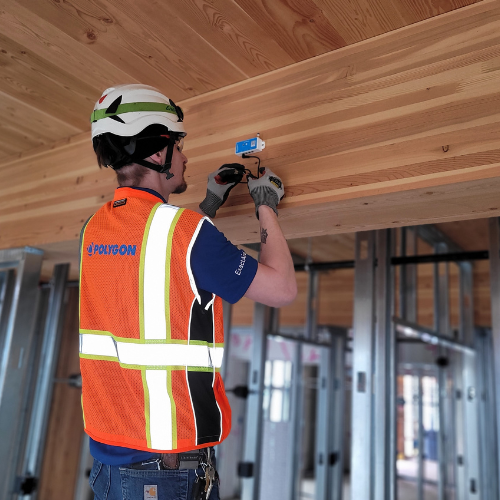
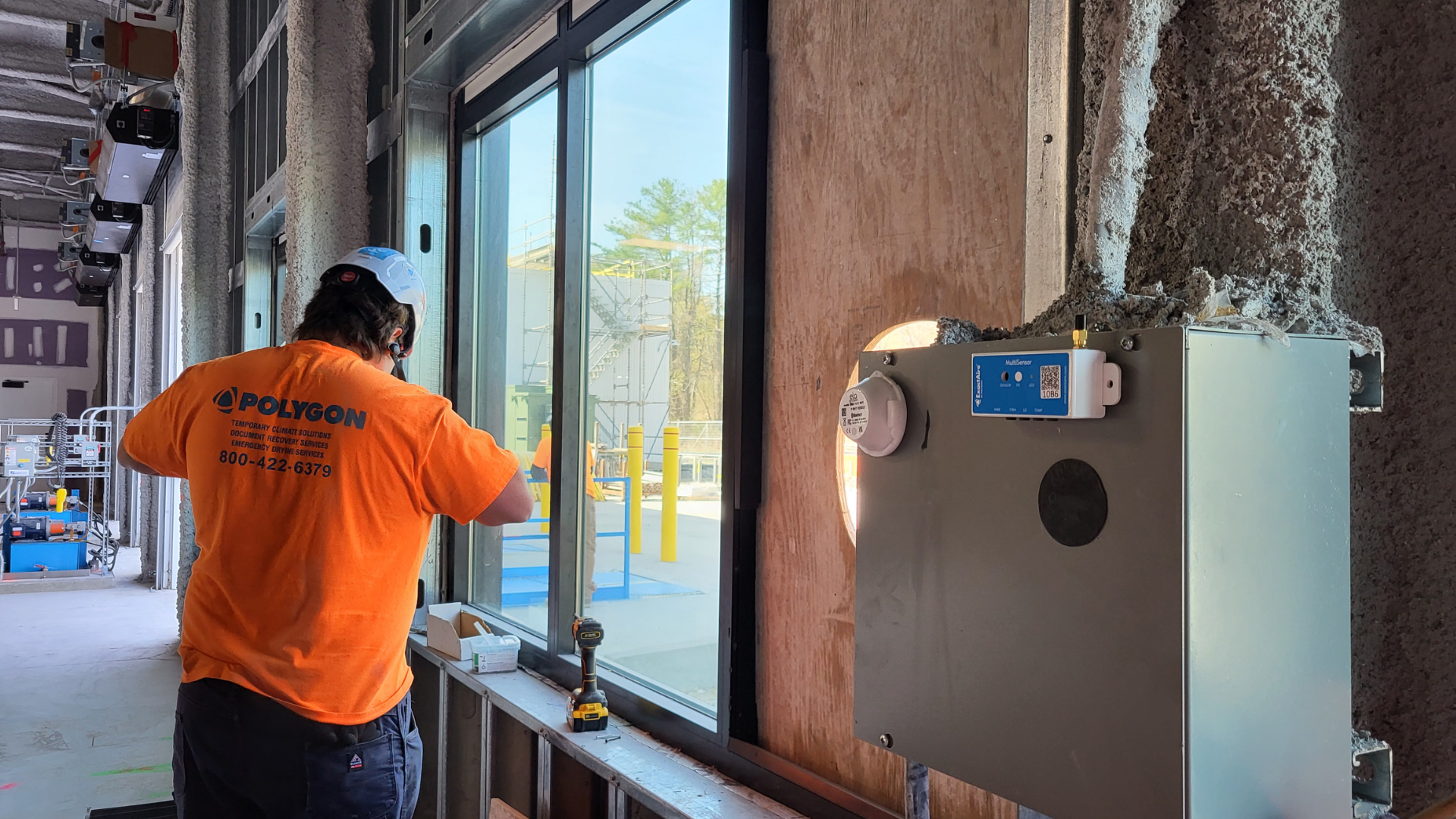
Achieving and maintaining the correct wood moisture content with the use of mechanically produced vapor pressure disequilibrium is critical for the construction phase, and establishing the required equilibrium between the vapor pressure of the materials and the surrounding air is essential for long-term moisture control. This equilibrium state indicates that the materials are neither giving off nor taking on moisture from the air, thus minimizing the risk of moisture-related issues such as dimensional instability, decay, or mold growth over time. Continuously monitoring moisture content and surrounding ambient temperature and relative humidity levels provides real-time data insights crucial for verifying that the correct moisture balance is reached and maintained on the project. Furthermore, data can be used to automatically control climate equipment ON/OFF providing a fuel-efficient approach to proactively mitigating risk. Polygon systems utilizing the Smart Controller have been proven to save fuel costs by up to 20% when compared to uncontrolled equipment.
By understanding the role of vapor pressure in environmental management and equilibrium wood moisture content, builders and designers can implement targeted moisture control measures that address the specific challenges associated with wood and mass timber construction. Employing strategies such as desiccant dehumidification systems and real-time monitoring will help maintain optimal moisture balance, ensuring the longevity and resilience of structures.
Contact us to learn how to use this technology on your next mass timber project.
Sources:
https://www.rdh.com/wp-content/uploads/2022/11/Mass-Timber-Moisture-Management-Guide.pdf
https://www.munters.com/en/solutions/dehumidification/

Emergency Support
1-800-422-6379Send an email
us_info@polygongroup.com24/7 Hotline
Urgent equipment and operational support
Property damage
Documents and contents damage
24/7 Emergency:
United States: 1-800-422-6379
Canada: 1-888-702-4782
Your questions and comments are important to us. Please send us your information with a description of your needs and we will connect with you promptly.
Polygon US Headquarters
15 Sharpners Pond Road, Building F North Andover, MA 01845
Phone: 1-800-422-6379
See all our US locations here: Polygon US office locations
For global support, please contact one of our offices listed here: Our Global offices - Polygon Group