Notice
You are now leaving Polygon Restoration's website and will be directed to another country in the group.
Do you want to proceed?
Notice
You are now leaving Polygon Restoration's website and will be directed to another country in the group.
Do you want to proceed?
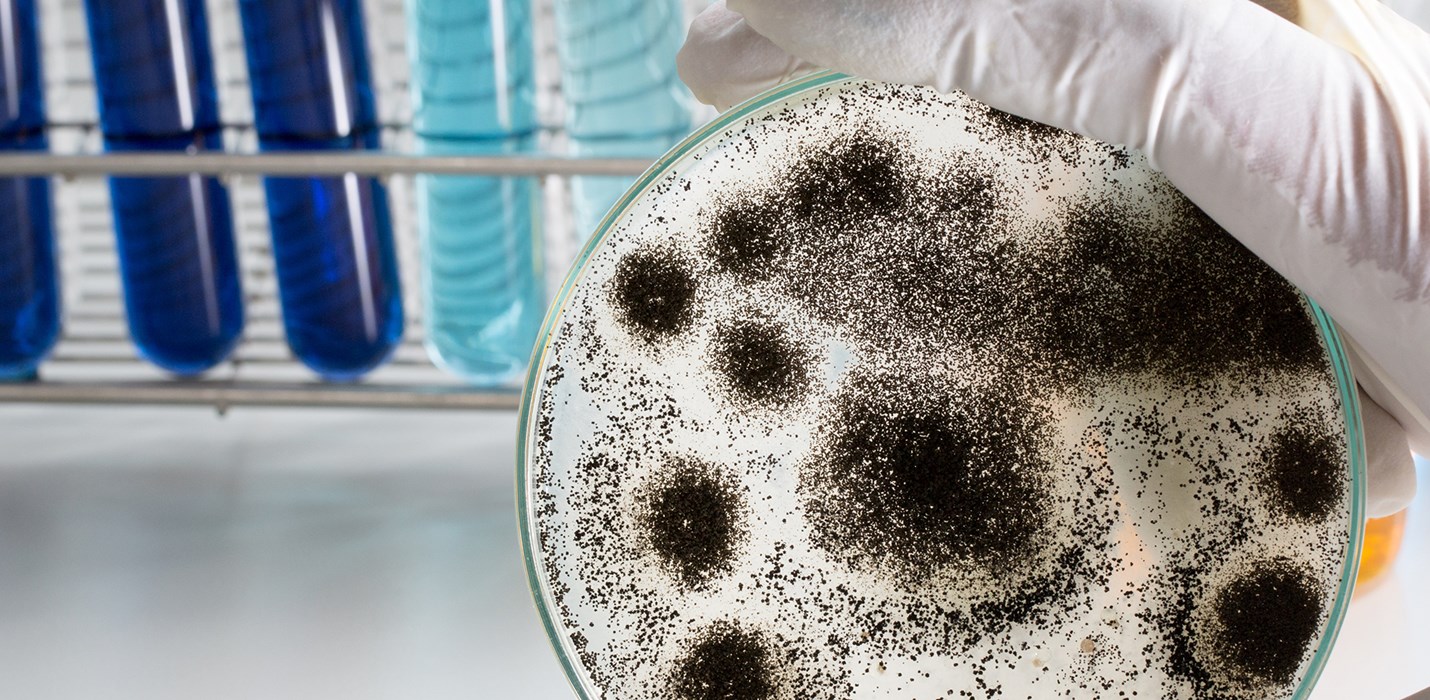
Isn’t it interesting how some relics of popular culture fall out of fashion, while others enjoy continued popularity among retro enthusiasts? Old 8-track tapes, for instance, are basically worthless, while vinyl record collections can retain their value for decades. Vinyl LPs can even gain value as time goes by – assuming, of course, they’re in good condition. Our experience providing disaster recovery services has turned up many examples of mildew- and mold damaged records. Left long enough, mildew and mold can render a vinyl record totally unplayable. However, if your mold damaged records aren’t too dirty to salvage, you can follow the instructions below to restore them to their previous vinyl glory.
How to Remove Mildew from Vinyl Record
Wearing a ventilation mask and gloves, begin by rubbing the loose mildew and mold off of the record with a soft cloth. Work along the grooves of the record, and adjust your cloth so you don’t re-dirty the record as you go.
Once the loose mildew has been removed from your mold-damaged records, it’s time for a more intense cleaning method. Disaster recovery services recommend a mixture of one part isopropyl alcohol (rubbing alcohol) to three parts water. Spray this combination on a soft cloth, and carefully work it into the grooves of the record. Always work in the direction of the grooves. You may also need to gently wipe the record’s label, but be careful not to soak it, or else the ink may run.
What not to do when salvaging mold damaged records:
As experts in the disaster recovery services field, we can tell you that some items are simply not recoverable. If certain mold damaged records are just too far gone to be salvaged for your listening pleasure, you can still make good use of them in the DIY craft projects listed below:
Clock face. There’s a hole in the center, and it’s round – in other words, old records make ideal clock faces! Clock kits are available online to turn any object into a unique timepiece.
Business cardholder. Cut a record in half. Use a few small dowels to space the halves about two inches apart, with the flat diameter side facing down. Then cut slits into the curved outer edge of the record, and voila! You have a funky business cardholder.
Wall art. If you have the tools and the gumption to cut old records, they can become stunning wall art. One method we’ve seen is to cut the record itself into the shape of your piece – for instance, a pair of birds or a butterfly. The artist Paul Villinski has created entire flocks of butterflies in some of his installations; the vinyl-based creatures seem to be fluttering across the wall. Other artists use records as canvases, painting directly onto them.
Earring holder. All you need for this project is an old record and some way of punching holes into it. Each hole can hold an earring. Necklaces can also be hung on an old record – instead of punching holes, create cuts on the outside of the record, near the top of where it will be hung.
[ Photo by: Hryck., via CC License ]

Emergency Support
1-800-422-6379Send an email
us_info@polygongroup.com24/7 Hotline
Urgent equipment and operational support
Property damage
Documents and contents damage
24/7 Emergency:
United States: 1-800-422-6379
Canada: 1-888-702-4782
Your questions and comments are important to us. Please send us your information with a description of your needs and we will connect with you promptly.
Polygon US Headquarters
15 Sharpners Pond Road, Building F North Andover, MA 01845
Phone: 1-800-422-6379
See all our US locations here: Polygon US office locations
For global support, please contact one of our offices listed here: Our Global offices - Polygon Group