Notice
You are now leaving Polygon Restoration's website and will be directed to another country in the group.
Do you want to proceed?
Notice
You are now leaving Polygon Restoration's website and will be directed to another country in the group.
Do you want to proceed?
The high-rise construction sector in the United States is experiencing a sustained boom, driven by growing urban populations, housing shortages, and increased demand for multi-family developments. Nationwide construction remains strong, with developers focused on maximizing land use and accommodating urban growth.
According to The Council on Tall Buildings and Urban Habitat, Miami, New York, Austin, Seattle, and Jersey City are the top 5 cities for tall buildings under construction in 2025, measured by total number of floors. This growth comes with challenges, particularly in keeping high-rise projects on schedule while managing moisture risk, indoor air quality, and material logistics.
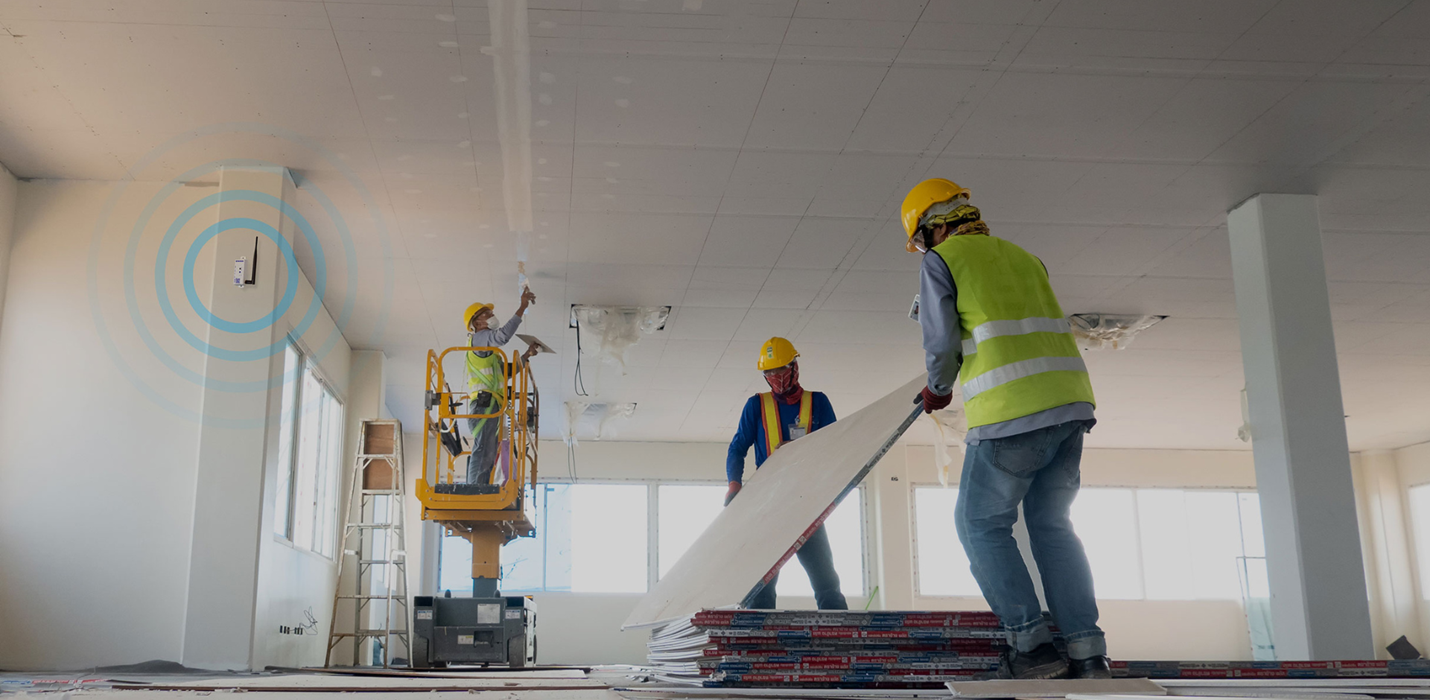
In a typical high-rise project, construction moves upward by the day. One floor might be being framed while another is already being painted. That fast pace, combined with overlapping trades and tight scheduling, makes efficient drywall drying essential. If joint compound doesn’t cure on time, every task that follows – sanding, painting, flooring – gets pushed back.
Unlike low-rise projects, high-rise environments have constrained airflow. Once the building starts closing in, natural ventilation is limited. Relying on passive drying or heaters alone can lead to inconsistent results, longer wait times, or moisture risks.
Desiccant dehumidification systems are engineered to dry drywall and other finishes quickly, often overnight, by removing the moisture from the space. By controlling conditions, dry times can be accelerated. The Northwest Wall and Ceiling Bureau outlines this in the drying time chart, with specific times and temperatures for drying of joint compound. Download the chart here.
Desiccant systems operate reliably across various U.S. climates, providing consistent drying conditions. More importantly, they adapt as a project evolves. A floor-by-floor drying plan can ensure the right conditions at the right stage, without interrupting workflow. Ductwork can easily be reconfigured so that drying moves ahead of activities, not behind them.
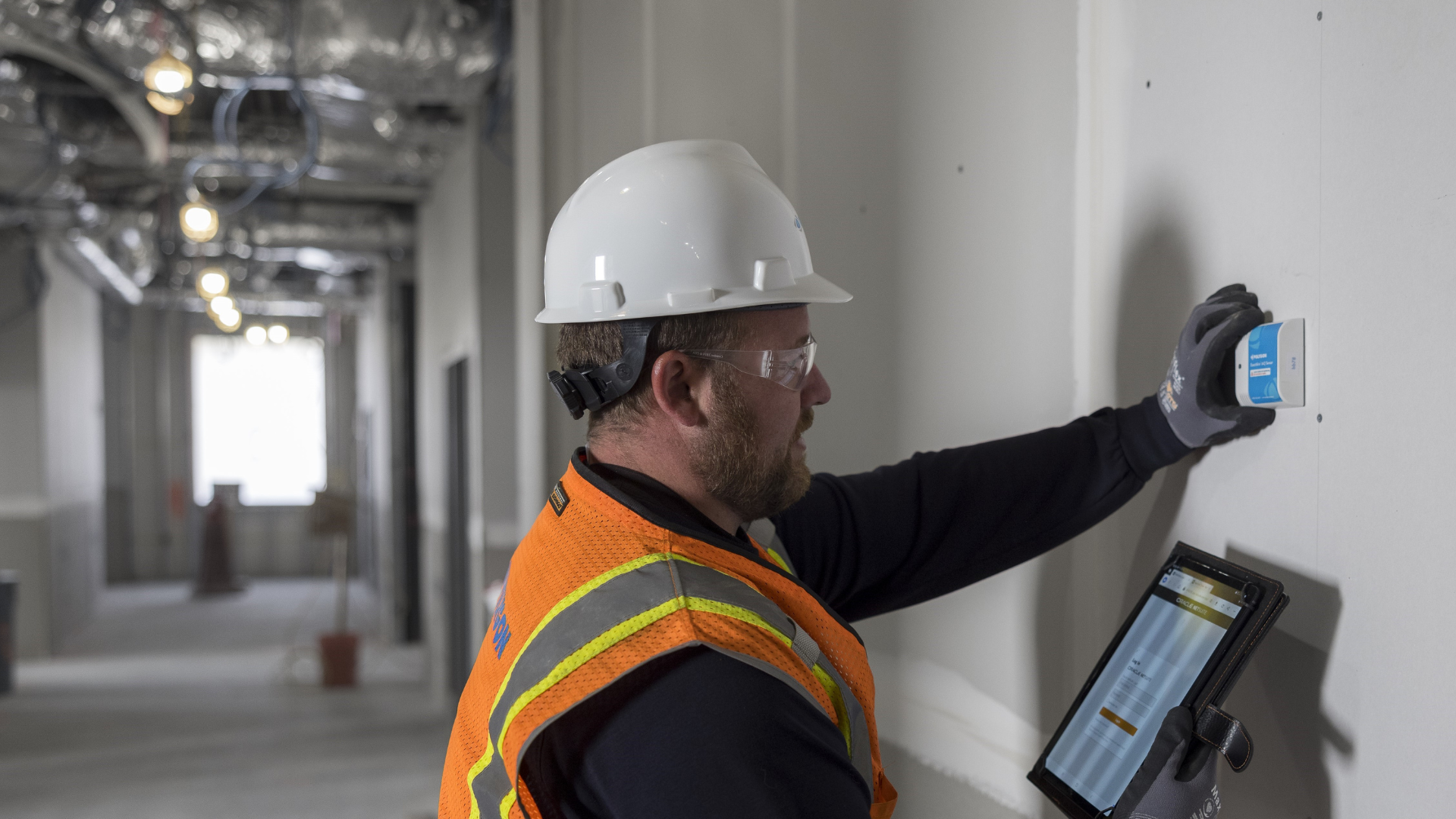
Real-time data becomes essential for project managers and site supervisors to have visibility on how drying is progressing across multiple levels. Some equipment providers now offer 24/7 environmental monitoring as part of a drying solution. Instead of using handheld meters. A network of sensors can deliver continuous data on temperature, humidity, moisture levels in wood, and indoor air quality.
Sensor data is accessible via live dashboards and alerts, helping the project team:
One of the ongoing challenges in high-rise builds is staging. With space at a premium, most materials, from doors to flooring to cabinetry, need to be stored on-site in conditions that won’t compromise their integrity. Extended exposure to humidity can result in warping, delamination, or adhesive failure. However, rescheduling deliveries or rotating stock across floors just to avoid moisture is costly and inefficient.
By creating dry, controlled environments throughout the building, Polygon solutions make it possible to store and install materials where and when they’re needed. That means less downtime, fewer damaged goods, and smoother workflows across all trades.
Contact our team to support your next high-rise project.
Sources:
https://constructioncoverage.com/research/cities-building-the-most-multi-family-housing
Council on Tall Buildings and Urban Habitat (CTBUH) - skyscrapercenter.com - Tallest Buildings Database

Emergency Support
1-800-422-6379Send an email
us_info@polygongroup.com24/7 Hotline
Urgent equipment and operational support
Property damage
Documents and contents damage
24/7 Emergency:
United States: 1-800-422-6379
Canada: 1-888-702-4782
Your questions and comments are important to us. Please send us your information with a description of your needs and we will connect with you promptly.
Polygon US Headquarters
15 Sharpners Pond Road, Building F North Andover, MA 01845
Phone: 1-800-422-6379
See all our US locations here: Polygon US office locations
For global support, please contact one of our offices listed here: Our Global offices - Polygon Group