Notice
You are now leaving Polygon Restoration's website and will be directed to another country in the group.
Do you want to proceed?
Notice
You are now leaving Polygon Restoration's website and will be directed to another country in the group.
Do you want to proceed?
Political activist, publisher, journalist, entrepreneur, and orator Marcus Garvey once stated, “A people without the knowledge of their past history, origin, and culture is like a tree without roots.” As such, valuable historical texts, books, documents, artworks, and ancient artifacts enable future generations to learn about their past, enabling discoveries of humankind’s triumphs and foibles over the years, engendering understanding that will allow for a better future.
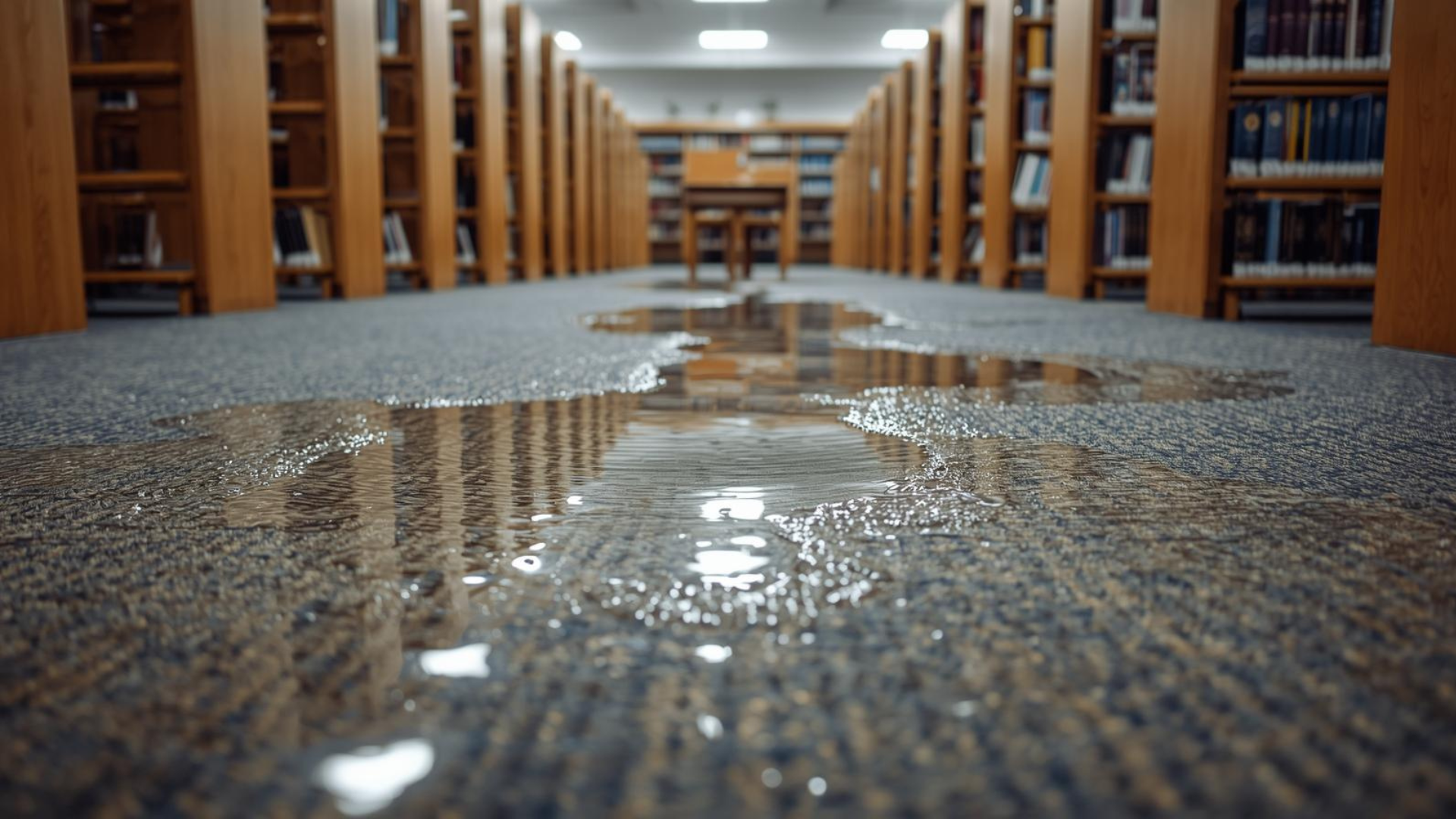
Thus, after a flood or other disaster, it’s critical for museums, churches, libraries, municipalities, archives, and historical societies to quickly and properly restore their most valuable historical items to avoid further damage and decay. This preservation process, an essential part of document management, begins with choosing the right restoration partner.
Although the terms are sometimes used interchangeably, when it comes to historical collections, conservation and preservation are two different concepts. In general, conservation refers to proactive steps taken to ensure the proper physical treatment of individual damaged items. For example, a fragile historical document that had been incorrectly framed by an amateur might be mounted on acid-free paper and put behind UV-resistant glass to ensure it does not degrade further.
On the other hand, the American Institute for Conservation of Historic and Artistic Works defines preservation as activities that minimize chemical and physical deterioration and damage and prevent loss of informational content. This broad concept includes not only disaster planning, but also activities such as treatment, replacement, or reformatting that address existing damage.
To ensure the permanence of their collections, earlier, less technologically advanced generations simply recorded the words of historical documents by publishing them; but as technology advanced, archivists began to use microfilm as a medium for preservation and document management. However, by the mid-20th century, rather than just capturing or copying the information, archivists increasingly saw the value in preserving the original documents themselves before they deteriorated.
The term intrinsic value is used by the National Archives and Records Service to describe historical materials with qualities and characteristics that should be retained in their original physical form, rather than as copies. Of course, these records may have significant monetary value as well—that’s why historical documents are routinely appraised for insurance replacement, probate, donation, purchase, sale, historical, and research purposes.
So, when disaster strikes, the monetary losses can be devastating, such as the numerous examples of water-related library disasters. In 1975, for instance, the Case Western Reserve University Library was flooded, saturating and muddying approximately 40,000 books and 50,000 maps, resulting in a recovery cost of $540,000. And when floods struck Prague in August 2002, extensive collections in more than 40 libraries were destroyed and damaged—the damage to the National Library alone was estimated at $11,000,000.
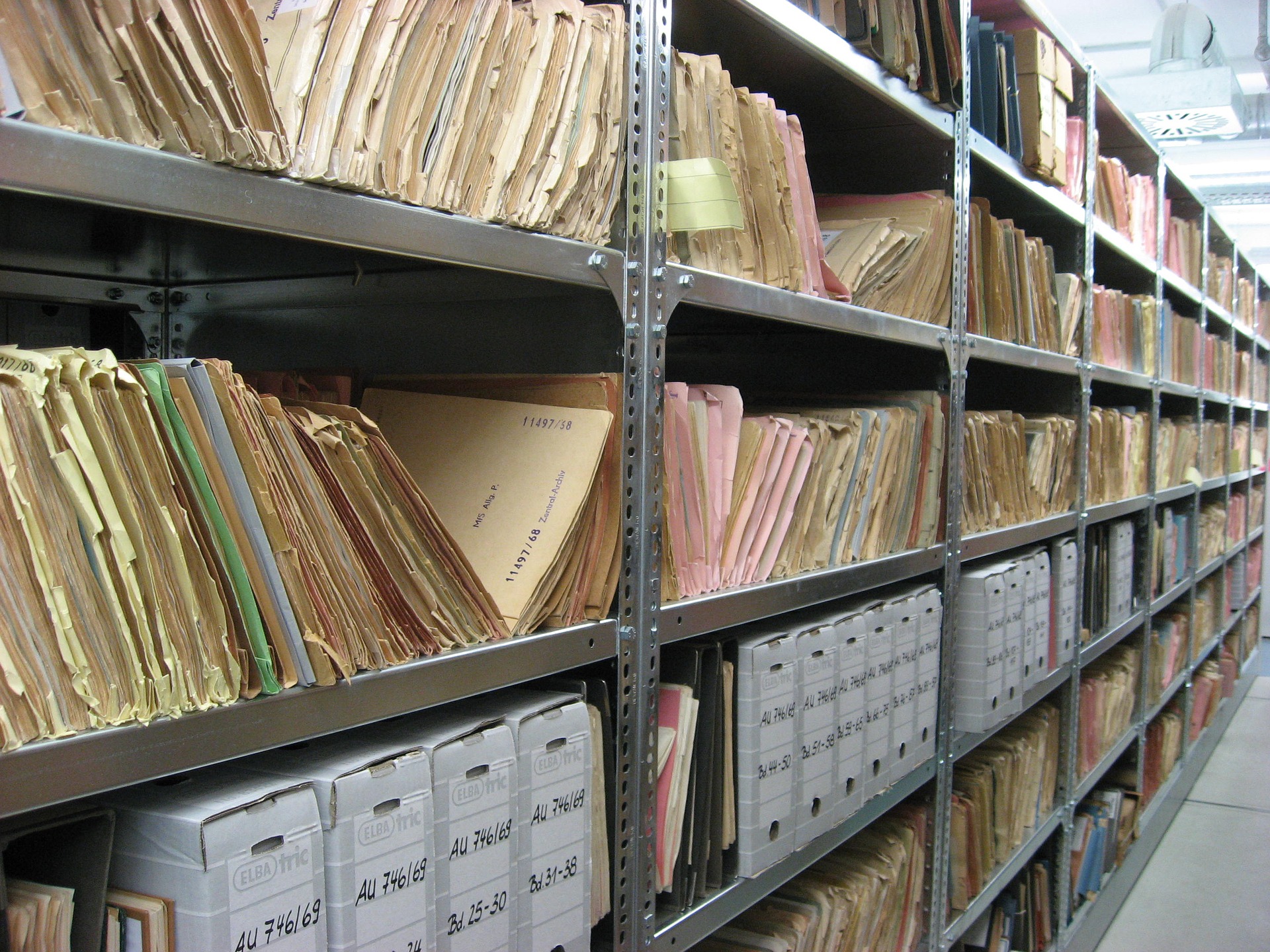
Of course, valuable documents aren’t found only in libraries and museums. Municipal buildings, churches, historical societies, and other institutions may house rare and irreplaceable records as well. Literature, maps, letters, genealogy records, business contracts, and photographs are just a few of the cultural and historical archives that may be represented in these collections. And these documents need not always be connected with famous people or events to prove valuable. Just as important to historians is the record of everyday life within a culture, including rituals, religion, foods, art, and other facets that make a culture unique. Unfortunately, many of these documents may not be cataloged and may be stored in various offices, storerooms, boxes, and cabinets, or in even more out-of-the-way spots, such as under a staircase or in the attic.
Responding quickly to damage from water or other emergencies requires a disaster plan. A number of document recovery solutions, such as vacuum freeze drying, desiccant air drying, and cleaning and sterilization, can be employed to reverse much of the damage. When documents can’t be salvaged, digital imaging can often be used to capture the information contained in damaged records. To determine the best course of action in performing document management, it’s vital to employ the services of a restoration specialist partner with extensive experience in restoration. Polygon is that partner.
By combining the passion for helping others with both experience and technology, the experts at Polygon maintain high standards in service delivery. Polygon has completed over 4,000 construction drying projects and successfully dried over 30,000 water-damaged environments. With almost 4,300 employees in 14 countries and more than 300 depots around the globe, Polygon maintains a local presence that enables quick response and unparalleled restoration of valuable archives. To find out more about how Polygon Group can help with disaster recovery planning, contact us today.

Emergency Support
1-800-422-6379Send an email
us_info@polygongroup.com24/7 Hotline
Urgent equipment and operational support
Property damage
Documents and contents damage
24/7 Emergency:
United States: 1-800-422-6379
Canada: 1-888-702-4782
Your questions and comments are important to us. Please send us your information with a description of your needs and we will connect with you promptly.
Polygon US Headquarters
15 Sharpners Pond Road, Building F North Andover, MA 01845
Phone: 1-800-422-6379
See all our US locations here: Polygon US office locations
For global support, please contact one of our offices listed here: Our Global offices - Polygon Group