Notice
You are now leaving Polygon Restoration's website and will be directed to another country in the group.
Do you want to proceed?
Notice
You are now leaving Polygon Restoration's website and will be directed to another country in the group.
Do you want to proceed?
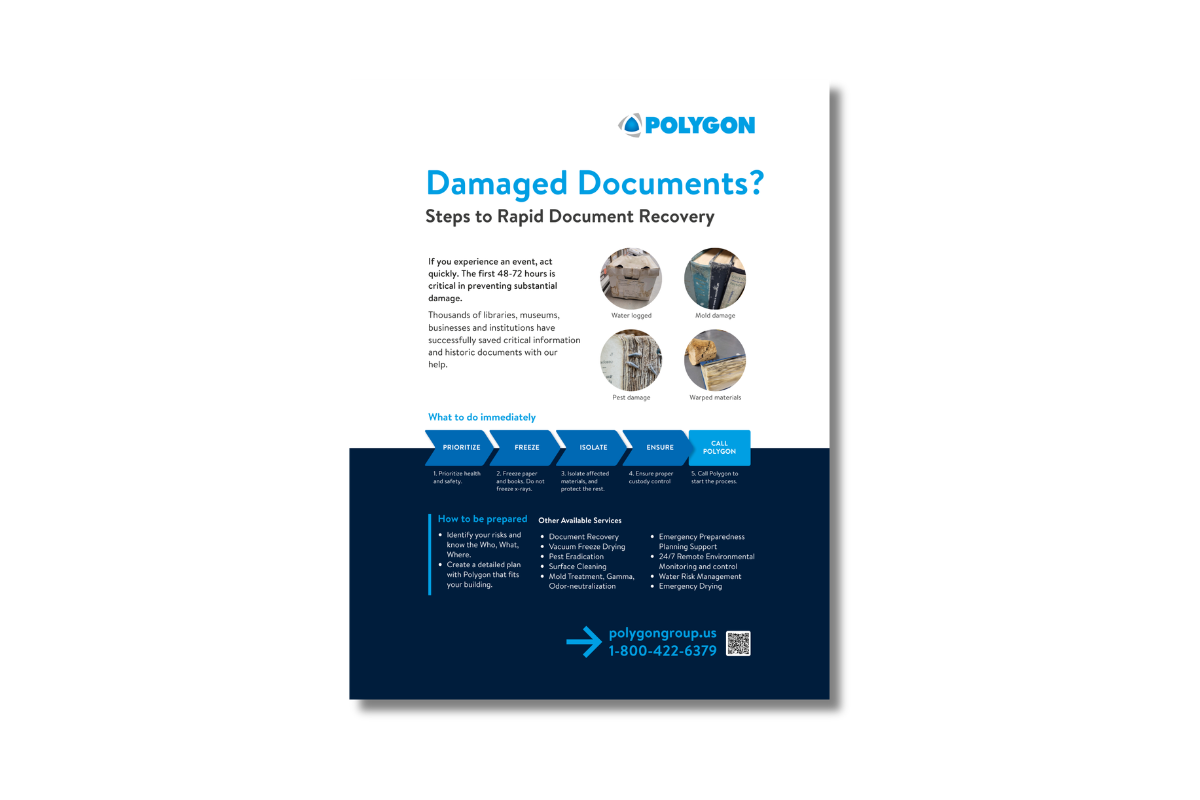
As educators return to school after summer break, they may discover more than empty classrooms and forgotten supplies. A musty smell, warped books, stuck-together pages, and visible mold are signs that items were exposed to moisture. Schools should reconsider simply throwing away materials. Here’s what you can do.
Acting quickly can make a significant difference in what can be recovered. Paper and other porous materials can absorb moisture fast. Once materials become damp, mold can begin developing, particularly when elevated humidity persists. The longer affected materials remain in those conditions, the greater the risk of permanent damage.
Contain the damage. When mold is discovered, moving affected books and documents can spread contamination to other areas and materials. Whenever possible, isolate the affected area and limit movement of contaminated items until they can be properly assessed and treated.
If materials are wet but do not show signs of mold, freeze them as soon as possible to slow further damage and help prevent mold growth.
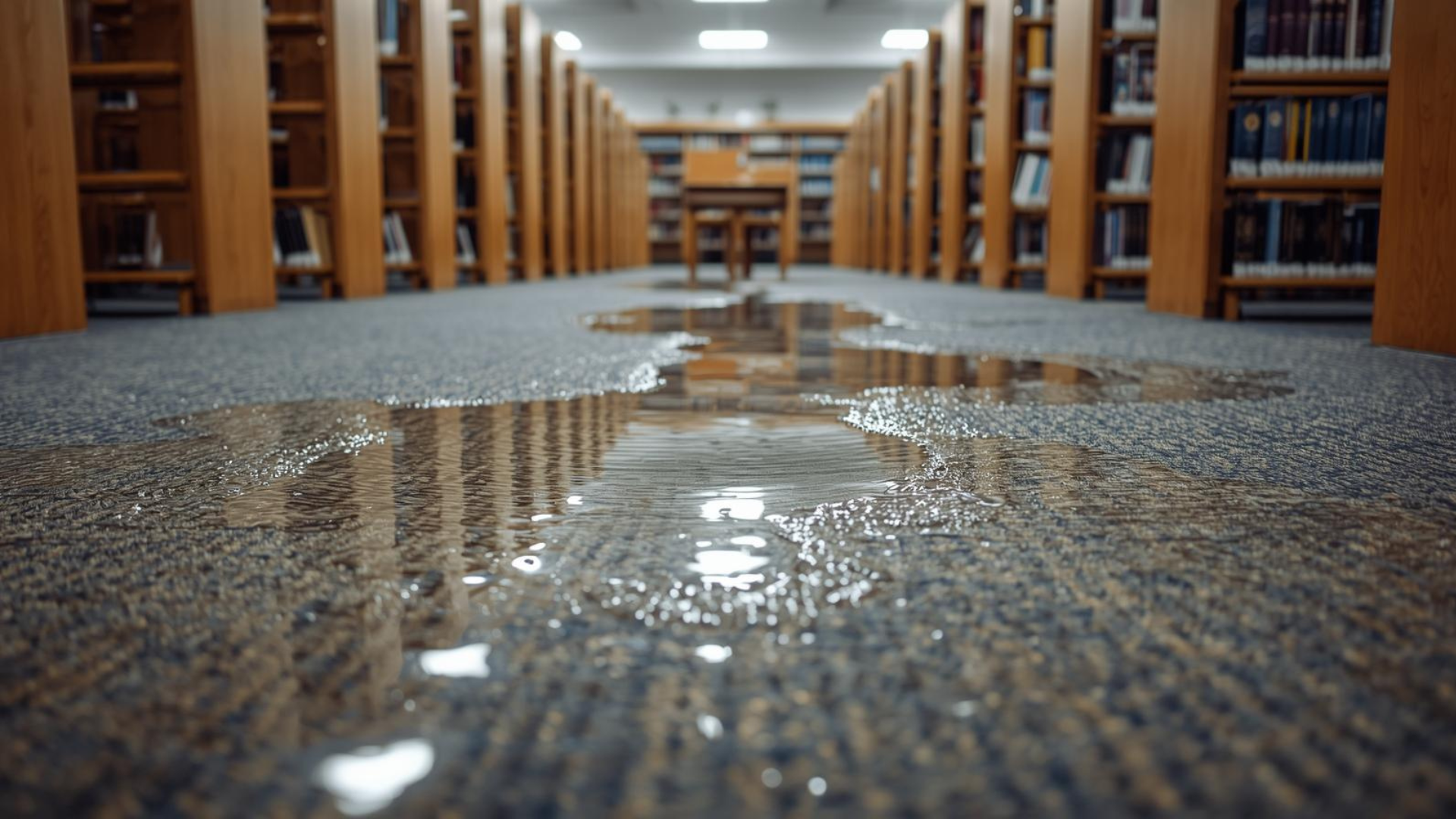
Now is the time to inspect libraries, storage rooms, archives, and classrooms in greater detail. Look for signs of moisture, mold, or water leaks. Focus on spaces with vulnerabilities, such as pipes, poor air quality, or low-traffic storage areas that might have been closed and under-ventilated.
Contact a professional document recovery specialist as soon as possible. They can help determine the extent of the damage, prioritize materials, and establish an appropriate course of action. Next steps depend on the materials, the type of moisture exposure, and how long they have been affected.
Recovery may include:
Once the immediate issues are under control, schools can take proactive steps to reduce the risk and impact of future incidents.
If your school discovers mold, water damage, or elevated moisture in books, records, or other materials, Polygon can help assess the damage and determine the best path to recovery. Contact us at the first sign of damage.

Emergency Support
1-800-422-6379Send an email
us_info@polygongroup.com24/7 Hotline
Urgent equipment and operational support
Property damage
Documents and contents damage
24/7 Emergency:
United States: 1-800-422-6379
Canada: 1-888-702-4782
Your questions and comments are important to us. Please send us your information with a description of your needs and we will connect with you promptly.
Polygon US Headquarters
15 Sharpners Pond Road, Building F North Andover, MA 01845
Phone: 1-800-422-6379
See all our US locations here: Polygon US office locations
For global support, please contact one of our offices listed here: Our Global offices - Polygon Group