Notice
You are now leaving Polygon Restoration's website and will be directed to another country in the group.
Do you want to proceed?
Notice
You are now leaving Polygon Restoration's website and will be directed to another country in the group.
Do you want to proceed?

By Hayley M. Taylor, CIC, CISR. Originally published by WINT.ai
Key takeaways
At our recent Risk to Resilience Summit, David Simkins, Director of Engineering and Technology at Polygon US, made a simple but important point: many construction water risk practices were built around climate assumptions that are no longer reliable.
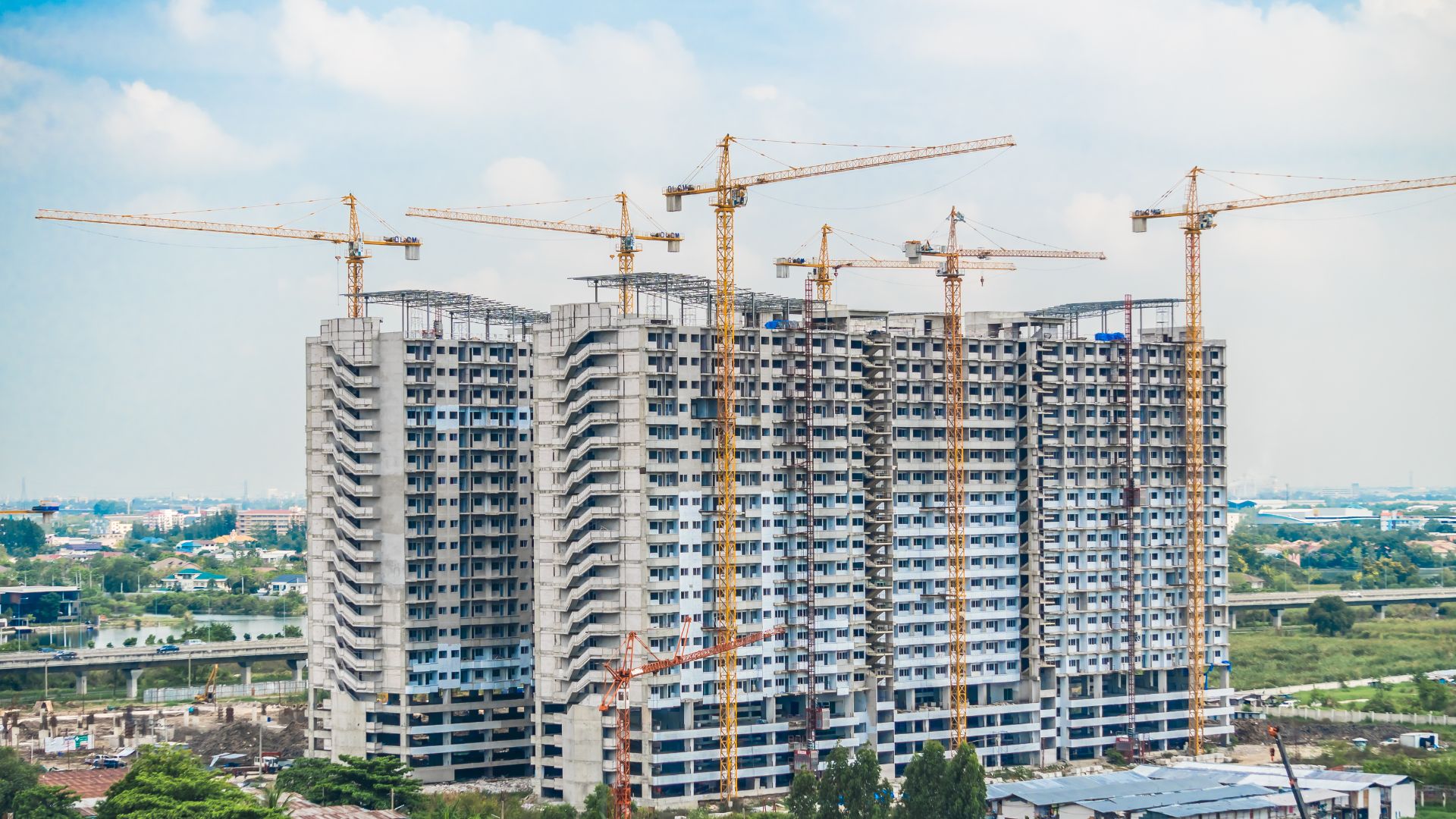
Buildings today are taller, larger, more complex and delivered on tighter schedules than they were even a decade ago. At the same time, they are exposed to weather that is becoming less predictable. That combination is changing both the frequency and severity of water-related losses across construction.
The discussion connected many of the trends the industry is already seeing: rising builder’s risk losses, tighter underwriting expectations and growing pressure on contractors to manage environmental conditions much earlier in a project’s lifecycle.
Most commercial buildings in the US are still designed around ASHRAE climate “design days,” which assume only about 1% of annual hours will exceed a building’s design conditions. In Orlando, that threshold sits around 94°F. In Phoenix, the long-standing assumption has been that 100°F temperatures typically arrive after April 1.
This year, Phoenix recorded nine separate 100°F days in March. Before 2026, there had only been one such occurrence in the historical record. The earliest triple-digit day arrived on March 18, roughly six weeks earlier than the historical average.
The broader trend extends well beyond Phoenix. Climate Central data shows “risky heat” days have increased across 232 US locations by an average of 21 additional days since 1970.
Extreme precipitation trends have moved in the same direction.
Conversely, the same is true for extreme and prolonged winter cold. Just this past January, Florida experienced one of the longest cold outbreaks in decades, underscoring how severe winter weather can disrupt construction even in historically warm regions. Without proper preparation, projects face risks such as frozen pipes, utility interruptions, schedule delays and unsafe working conditions.
Construction sites absorb these conditions long before a building envelope or mechanical system is fully operational. Concrete still cures at the same rate. Drywall still absorbs moisture. Mass timber still requires controlled environmental conditions. And the requirement of supplying reliable temporary water remains. The materials and physics have not changed, but the environmental conditions around them have.
The climate shift alone would create challenges, but the impact is amplified by the way projects are being built today.
Several industry trends are converging at once:
The result is that a water event today can have broader consequences than it would have had ten years ago. A wet stud bay used to be a localized issue. On a compressed data center schedule with mass timber framing, it can create turnover delays, remediation costs and warranty exposure years later.
The loss data reflects that shift. Water damage now accounts for more than 30% of construction-related losses, making it one of the largest drivers of builder’s risk claims.
Water losses that trigger insurance claims are usually the most visible part of the problem. In practice, many of the largest project impacts sit outside the claim itself. Those costs can include:
There is also a safety component. During the Summit, David noted that OSHA construction injury data and assessments from the American Society of Safety Professionals show elevated injury rates during rework activities, which often fall outside normal workflow patterns and established routines.
When environmental disruption creates schedule pressure and schedule pressure creates rework, costs compound quickly in areas that insurance policies may not fully cover.
One of the clearest themes across projects and carrier conversations is that water risk management is moving earlier in the project lifecycle.
On the underwriting side, carriers are increasingly expecting active water monitoring as part of the risk strategy. US insurers already pay out more than $16 billion annually in water damage claims, and some carriers are beginning to incorporate automatic shutoff technologies directly into underwriting requirements.
Contractors are moving in the same direction. Many have experienced a major loss firsthand and have seen the downstream impact on schedules, turnover and reputation. As a result, environmental monitoring and mitigation are increasingly becoming standard practice rather than project-specific add-ons.
The overall approach is becoming more consistent across the industry: identify and manage environmental risk early instead of reacting after damage occurs.
As projects begin drying in and systems come online, teams are deploying sensors to monitor temperature, humidity, wood moisture content, leak conditions, water flow, valve activity and indoor air quality in higher-risk areas. Smart controls can then tie environmental conditions to appropriately sized climate-control equipment so systems run only when conditions require them.
Advanced monitoring platforms can also help identify abnormal water behavior, generate alerts, support remote response and trigger shutoff actions when leaks are detected.
The benefit is a tighter prevention and response cycle. Teams can prioritize monitoring around higher-risk areas, size mitigation equipment based on actual building conditions and respond to issues faster before they expand into larger losses.
For owners, GCs and risk managers, several practical changes follow from this shift:
The climate conditions projects are exposed to are changing. Building systems and delivery schedules are changing with them. Water risk management practices are evolving in response.
At Wint, we appreciated David Simkins and the Polygon team bringing a practical, field-tested perspective to the discussion at the Risk to Resilience Summit: Water in Construction. The work continues on every project site, one decision at a time.
If you’d like to watch the full session, you can find the recording here.

Emergency Support
1-800-422-6379Send an email
us_info@polygongroup.com24/7 Hotline
Urgent equipment and operational support
Property damage
Documents and contents damage
24/7 Emergency:
United States: 1-800-422-6379
Canada: 1-888-702-4782
Your questions and comments are important to us. Please send us your information with a description of your needs and we will connect with you promptly.
Polygon US Headquarters
15 Sharpners Pond Road, Building F North Andover, MA 01845
Phone: 1-800-422-6379
See all our US locations here: Polygon US office locations
For global support, please contact one of our offices listed here: Our Global offices - Polygon Group