
Notice
You are now leaving Polygon Restoration's website and will be directed to another country in the group.
Do you want to proceed?
Notice
You are now leaving Polygon Restoration's website and will be directed to another country in the group.
Do you want to proceed?

As construction projects near completion, the focus shifts from building performance to occupant health. One critical step before turnover is validating Indoor Air Quality (IAQ) -especially for projects pursuing LEED certification. This is where Polygon plays an important supporting role.
During construction, activities like drywall finishing, sanding, and material installation can generate airborne dust and fine particulates. Even with standard housekeeping measures in place, these particles can linger in the air, on surfaces, and in system ducts, which can impact IAQ test results.
LEED IAQ testing requires that parameters such as particulate matter (PM10) remain below defined thresholds. If levels are too high, projects risk delays, re-testing, or missed credits right at the finish line.
Polygon supports project teams during commissioning by providing data-driven insight and mitigation support, helping teams understand when, where, and how to take action before formal IAQ testing begins.
For a recent project, Polygon partnered with the construction team and an independent Certified Industrial Hygienist to support IAQ testing and LEED documentation.
Traditional methods include sample testing of key areas. Samples are sent to the lab for offsite analysis. Typically, results are returned anywhere between 2-6 days later when the team can determine next steps if any.
Instead, Polygon can deploy calibrated air quality sensors to continuously monitor particular (or other parameters) ahead of sampling. This real-time approach can reveal periods of elevated particulate levels during finishing activities and helped the team understand how conditions were trending over time.
In the example below, the specification was to demonstrate that the contaminant maximum concentration of particulates (PM10) did not exceed 50 micrograms/cu. The initial PM10 levels failed when the sample was sent to the lab. When monitoring was put in place, data showed that levels were well above that maximum in multiple areas.
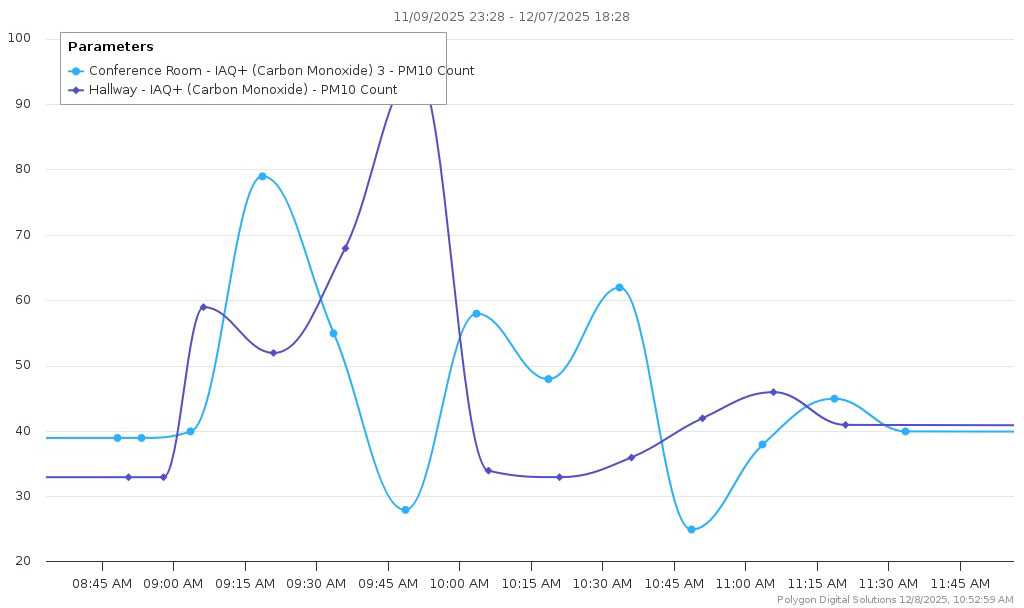
Figure 1. PM10 levels tracked across occupied spaces in a data center prior to mitigation, highlighting fluctuations during construction.
Using monitoring data, Polygon and/or a project team can implement swift corrective actions. In the case described above, an in-depth visual inspection found significant amounts of dust and debris on the carpet and surfaces. The team take the following actions:
Mitigation efforts were adjusted dynamically as PM10 levels decreased and stabilized well below the maximum level specified.
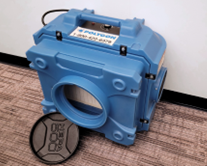
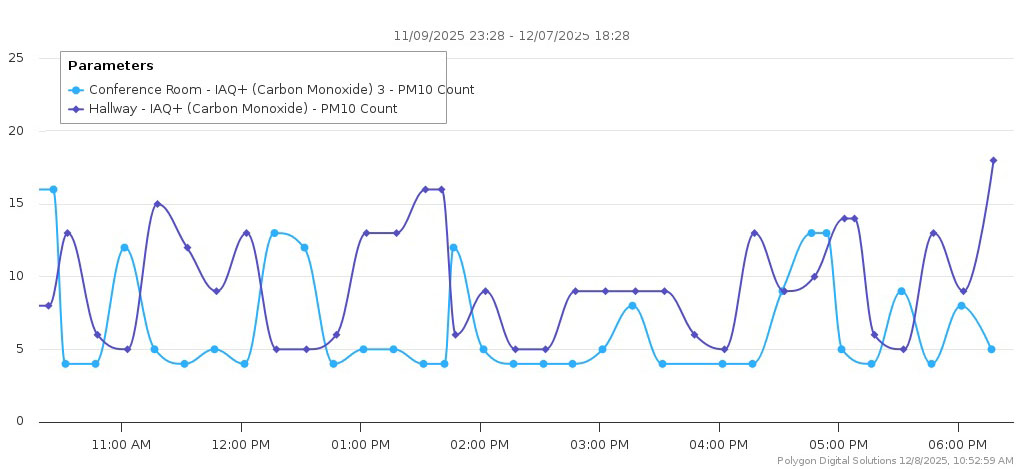
Figure 2. Targeted air filtration and airflow control implemented in data center to reduce particulate levels prior to testing.
Once conditions stabilize, Polygon can coordinate with an independent Certified Industrial Hygienist to perform formal IAQ sampling in accordance with LEED requirements. Polygon’s continuous monitoring data helped inform when sampling should occur and which areas were most representative, reducing uncertainty and minimizing the risk of failed tests.
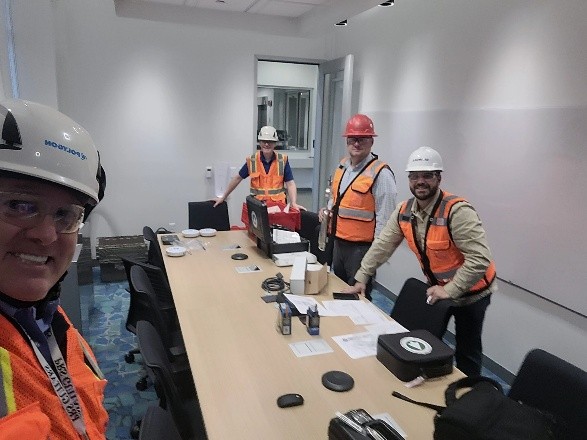
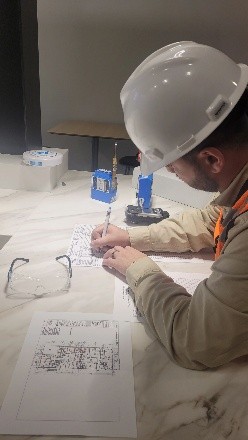
“Using Polygon’s IAQ monitoring before sampling helps project teams know where conditions are likely to fail ahead of time. Armed with data, they can do detailed cleaning and filter air in problem areas– reducing unnecessary re-sampling, effort, and delay. Once the data shows the corrective measures improved conditions, we can go in and do the official IAQ assessment. It allows everyone to approach testing for LEED certification with much greater confidence and efficiency.”
— Michael Symula, Certified Industrial Hygienist of MGS Environmental
By combining continuous monitoring, targeted mitigation, and third-party IAQ testing, Polygon helps project teams take a proactive approach to IAQ at commissioning. The result is smoother turnover, stronger LEED documentation, and healthier buildings from day one.
Reach out to us to learn more about Polygon’s indoor air quality monitoring and IAQ assessment services.

Emergency Support
1-800-422-6379Send an email
us_info@polygongroup.com24/7 Hotline
Urgent equipment and operational support
Property damage
Documents and contents damage
24/7 Emergency:
United States: 1-800-422-6379
Canada: 1-888-702-4782
Your questions and comments are important to us. Please send us your information with a description of your needs and we will connect with you promptly.
Polygon US Headquarters
15 Sharpners Pond Road, Building F North Andover, MA 01845
Phone: 1-800-422-6379
See all our US locations here: Polygon US office locations
For global support, please contact one of our offices listed here: Our Global offices - Polygon Group


