Notice
You are now leaving Polygon Restoration's website and will be directed to another country in the group.
Do you want to proceed?
Notice
You are now leaving Polygon Restoration's website and will be directed to another country in the group.
Do you want to proceed?
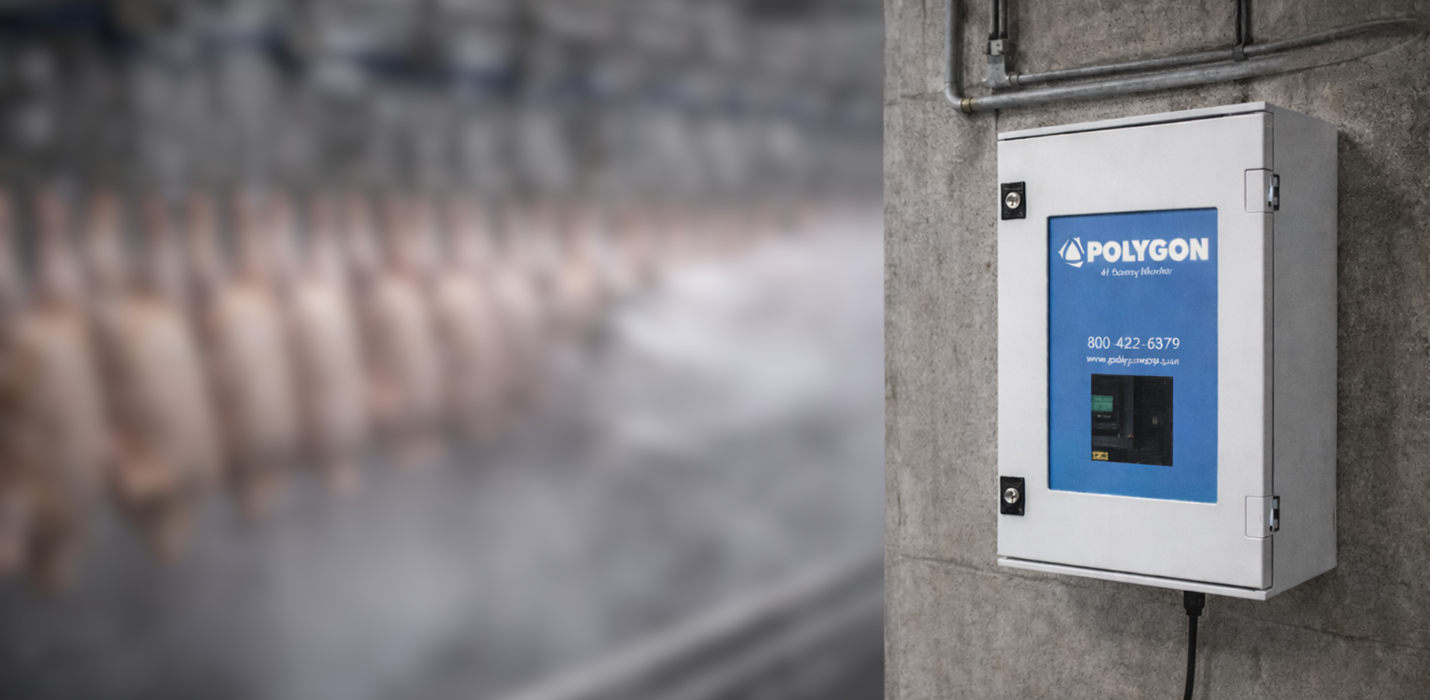
Toxic gases are an unavoidable part of food and beverage manufacturing, often tied to essential processes like sanitation and disinfection. When these gases go unmonitored, they can quickly compromise worker safety, regulatory compliance, and production continuity. Among the most critical gases in modern food plants is Peracetic Acid (PAA).
Exposure to toxic gases doesn’t always result from equipment failures or emergency events. In many facilities, unsafe conditions can develop during normal operations, such as sanitizing agents, temperature shifts, or inadequate ventilation allow gases to accumulate.
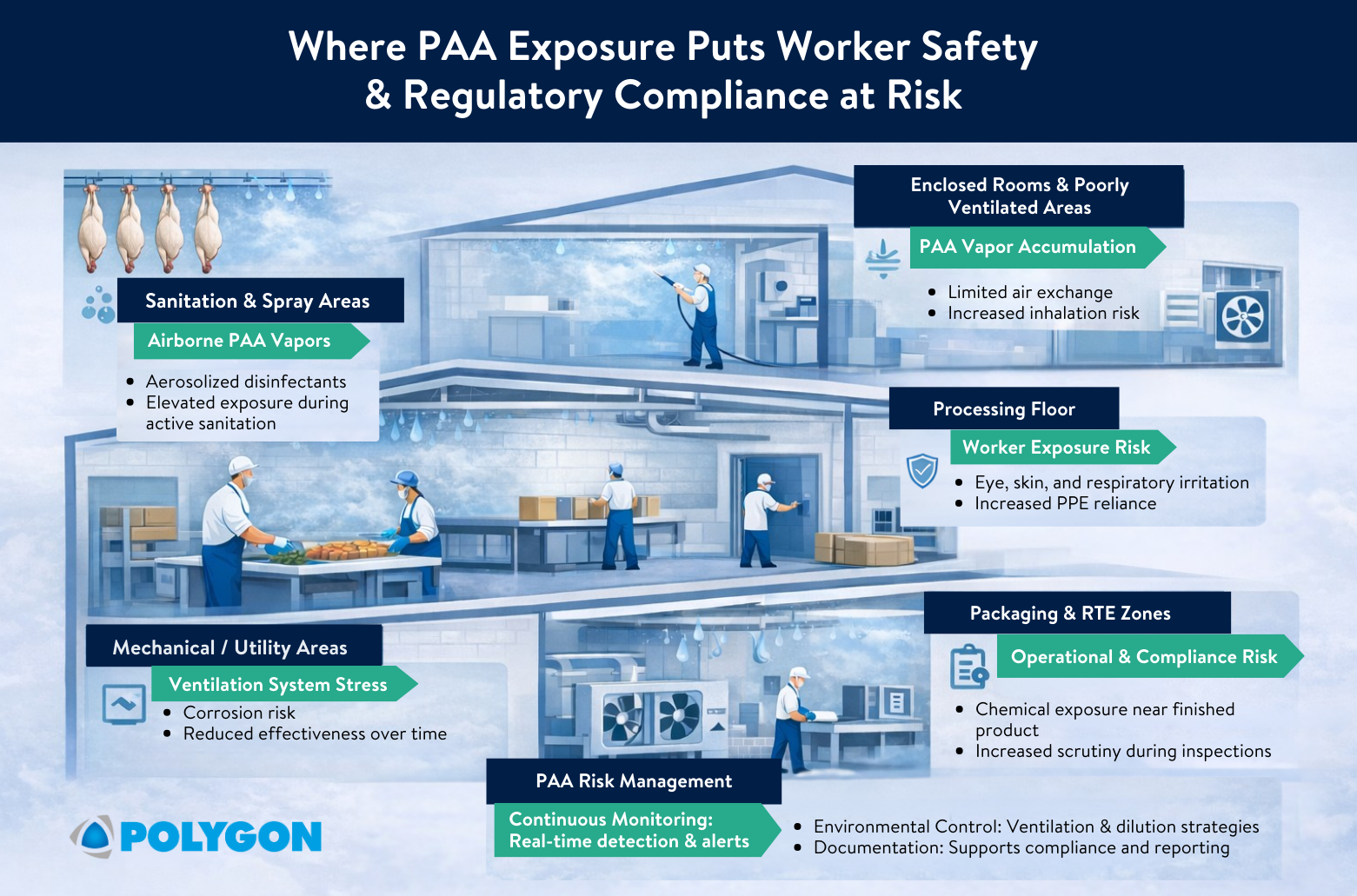
Without continuous monitoring, these hazards may go unnoticed until they force a shutdown or trigger a safety incident, making real-time air quality visibility an operational necessity rather than a “nice to have.”
PAA is widely used because it effectively controls pathogens and supports food safety programs. However, when PAA becomes airborne, it can irritate the eyes, skin, and respiratory system, especially in enclosed or poorly ventilated spaces. What makes it particularly challenging is how quickly concentrations can fluctuate based on airflow, humidity, and production activity. Periodic checks are insufficient; continuous monitoring combined with automated responses is the most reliable way to protect employees while maintaining sanitation effectiveness.
Polygon’s remote monitoring and control system delivers continuous insight into toxic gas levels, including PAA. Instead of reacting after unsafe conditions arise, facilities can track trends, receive early warnings, and automatically adjust ventilation and environmental systems in real time.
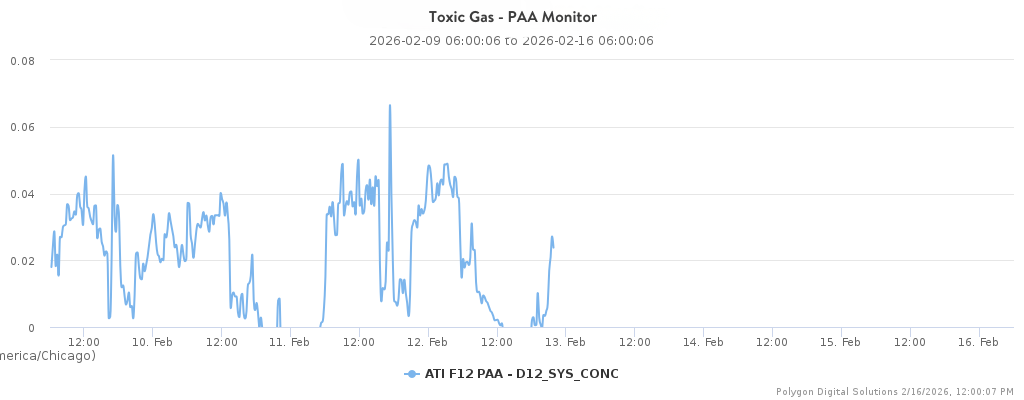
This proactive approach helps prevent incidents, reduce downtime, and support compliance documentation without disrupting production.
Polygon has also secured a U.S. patent for advanced PAA monitoring and control technology, highlighting its leadership in managing this complex risk. The patented system enables precise, real-time tracking of airborne PAA and integrates directly with facility control systems, ensuring safer working conditions consistently. By embedding PAA monitoring into a broader environmental strategy, plants gain better control, improved consistency, and greater confidence in their safety programs.
Toxic gases, particularly Peracetic Acid, present real challenges in industrial plants, but they are manageable with the right approach. Continuous monitoring and automated control allow facilities to move from reactive safety measures to proactive environmental management, keeping food plants safe, compliant, and productive even under demanding operating conditions.
To learn more about Polygon monitoring applications and solutions, visit toxic gas monitoring

Emergency Support
1-800-422-6379Send an email
us_info@polygongroup.com24/7 Hotline
Urgent equipment and operational support
Property damage
Documents and contents damage
24/7 Emergency:
United States: 1-800-422-6379
Canada: 1-888-702-4782
Your questions and comments are important to us. Please send us your information with a description of your needs and we will connect with you promptly.
Polygon US Headquarters
15 Sharpners Pond Road, Building F North Andover, MA 01845
Phone: 1-800-422-6379
See all our US locations here: Polygon US office locations
For global support, please contact one of our offices listed here: Our Global offices - Polygon Group