Notice
You are now leaving Polygon Restoration's website and will be directed to another country in the group.
Do you want to proceed?
Notice
You are now leaving Polygon Restoration's website and will be directed to another country in the group.
Do you want to proceed?

Electrification is quickly becoming the baseline for modern construction. But for general contractors (GCs), success is not just about switching from diesel to electric; it is about delivering real decarbonization in a way project teams will actually adopt. Because if a solution adds complexity to the field, it will not last. Electrification done right can reduce carbon and make jobsites easier to manage.
Electrification replaces fossil fuel-powered equipment with electric alternatives. Decarbonization goes further, it is about reducing total carbon impact across the project. Without the right strategy, all-electric jobsites can still overconsume energy, miss emissions targets, and create more coordination for field teams. Electrification is the tool. Decarbonization is the outcome.
On some jobsites, climate control equipment like temporary heating, cooling and dehumdification units, runs continuously, regardless of demand, at full output even when conditions are met, and without clear visibility into performance. On others, it doesn’t run when it should, leading to extended dry times. This creates energy waste, schedule delays and labor friction, with crews constantly adjusting and reacting. The issue is not just inefficiency—it is making already busy teams work harder than they need to.
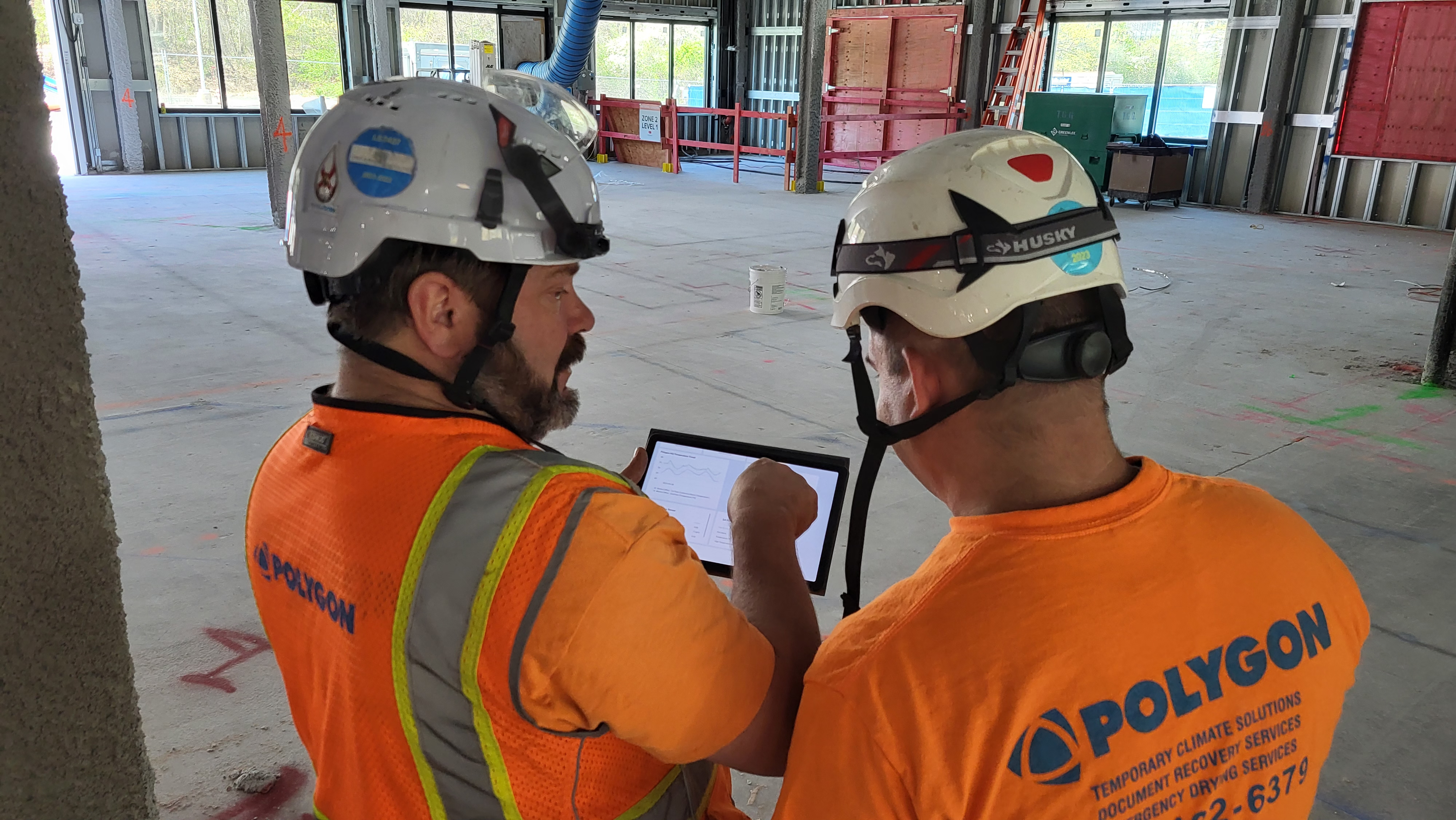 Decarbonization strategies will succeed if project teams adopt them. Electrification must fit into existing workflows, reduce manual oversight, and improve reliability without adding complexity. When systems are properly designed and managed, electrification reduces friction, lowers carbon, and increases adoption. Here is some things you can do to make sure teams actually use it.
Monitor: Make Conditions Visible Without Adding Burden
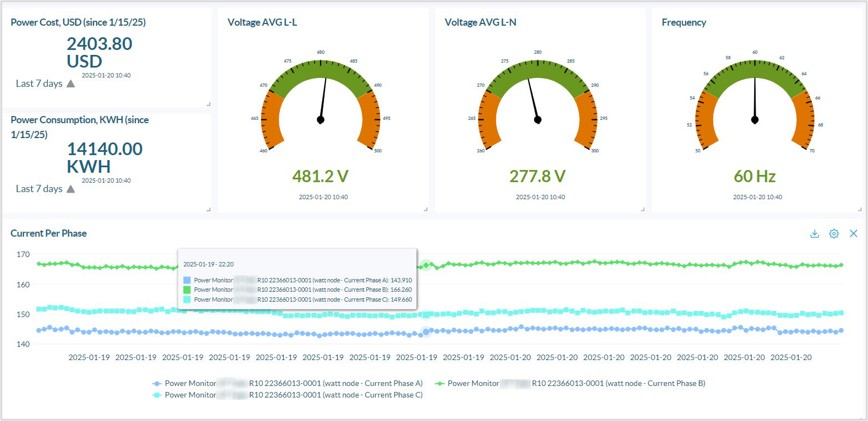
With the right partner, temperature, humidity – even IAQ - are tracked in real time, equipment performance is continuously monitored, and teams receive key information at the right time. The system handles the monitoring so the field team does not have to take manual readings and interpret data.
Manage: Integrate Systems That Work as One Environment
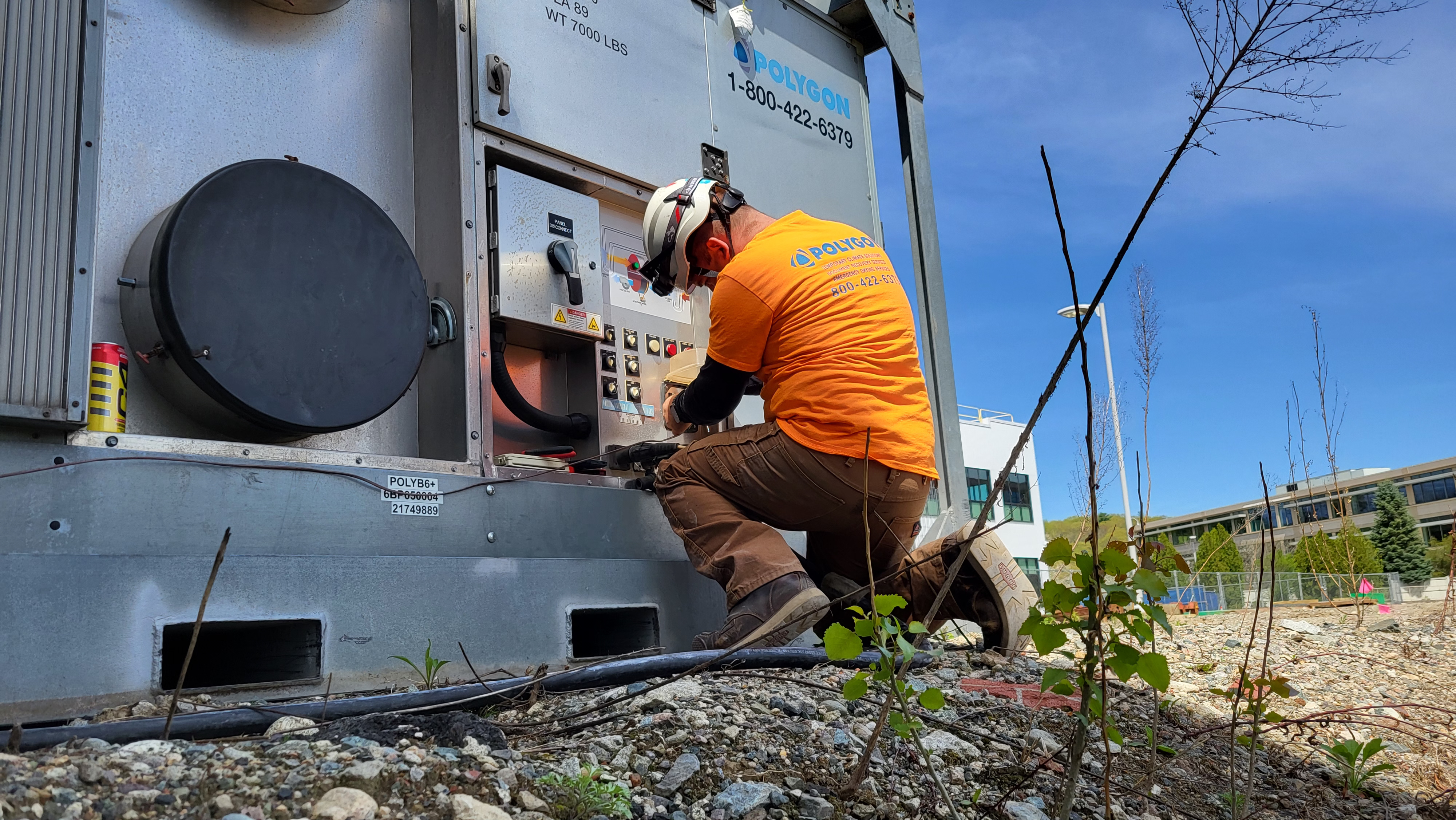 Electrification works best when treated as a coordinated system. Teams can align climate control with construction phases, right-size equipment, coordinate power usage, and maintain stable conditions. At Polygon, we actually manage the system to spec so projects teams have fewer adjustments, fewer surprises, and more predictable operations.
Mitigate: Modulate Equipment to Reduce Carbon and Workload
Technology is available to modulate climate control systems automatically to output is based on real-time conditions. Then it can scale down as environments stabilize, and only scale up on zones that need conditioning. This reduces energy consumption and emissions while also reducing manual intervention and improving reliability for field teams.
Leading GCs are moving from one-off equipment rentals to climate control partners who evaluate equipment options early, monitor conditions continuously, and optimize and document performance automatically. This delivers measurable decarbonization for leadership and more reliable operations for project teams.
Electrification is driven by regulations, sustainability commitments, and ESG reporting requirements. Adoption will depend on whether these solutions make jobsites easier to run. The most effective strategies lower carbon, reduce waste, and simplify operations. Read more in this case study.
The best first step is understanding your project, jobsite, and corporate goals. A climate control partner can identify electrification and hybrid options, energy management opportunities, and deliver decarbonization without adding field complexity.
Start planning with Polygon. Learn how optimized an all-electric system can reduce carbon emissions without adding complexity to your next project.
Talk to an expert

Emergency Support
1-800-422-6379Send an email
us_info@polygongroup.com24/7 Hotline
Urgent equipment and operational support
Property damage
Documents and contents damage
24/7 Emergency:
United States: 1-800-422-6379
Canada: 1-888-702-4782
Your questions and comments are important to us. Please send us your information with a description of your needs and we will connect with you promptly.
Polygon US Headquarters
15 Sharpners Pond Road, Building F North Andover, MA 01845
Phone: 1-800-422-6379
See all our US locations here: Polygon US office locations
For global support, please contact one of our offices listed here: Our Global offices - Polygon Group