Notice
You are now leaving Polygon Restoration's website and will be directed to another country in the group.
Do you want to proceed?
Notice
You are now leaving Polygon Restoration's website and will be directed to another country in the group.
Do you want to proceed?

In many advanced manufacturing environments, controlling moisture is not optional; it is fundamental to process stability, product quality, and equipment reliability. One of the most important variables used to manage moisture is dew point, particularly in applications that require extremely dry air conditions.
Low dew point environments are engineered to limit water vapor to levels so low that condensation becomes highly unlikely under normal operating conditions. Achieving and maintaining these conditions requires a strong understanding of how moisture behaves, carefully designed systems, and continuous monitoring to verify that dew point conditions remain within specification.
A low dew point environment refers to an extremely dry air condition where water vapor content is reduced to the point that condensation only occurs at very low temperatures, typically far below standard industrial conditions. In many industrial applications, a low dew point is typically considered at or below
| Dew Point | Water Vapor (ppmv) | Use Case |
|---|---|---|
| -100°F | ~0.8 ppmv | Ultra-high-purity semiconductor manufacturing, specialty gas distribution systems, glove boxes for lithium battery production |
| -80°F | ~4 ppmv | High-purity instrument air, pharmaceutical processing, cryogenic gas systems |
| -60°F | ~22 ppmv | Well-performing heatless desiccant dryers, industrial compressed air for critical controls, offshore instrumentation |
| -40°F | ~128 ppmv | Standard industrial desiccant dryer specification, pneumatic controls, paint systems, outdoor winter instrumentation |
| -20°F | ~510 ppmv | Regenerative dryers operating under load, moderately dry compressed air systems |
| 0°F | ~1,200 ppmv | Refrigerated compressed air in cold climates, heated buildings during winter |
| 32°F | ~6,000 ppmv | Food production facility dewpoint target |
| 70°F | ~24,600 ppmv | Warm, humid summer air, tropical environments, indoor air at 70°F and 100% RH |
Use cases are illustrative examples based on common compressed-air, semiconductor, pharmaceutical, and instrumentation industry practices. Actual moisture specifications vary by process and manufacturer.
In low dew point environments, moisture levels are controlled to the extent that air must be cooled significantly before water vapor begins to condense into liquid. This level of dryness is necessary in processes where even trace humidity can negatively impact performance quality or safety.
Controlling dew point plays a key role in maintaining consistent and reliable industrial operations. Even small amounts of moisture can have significant consequences in sensitive processes. Continuous monitoring helps identify changing conditions before they impact product quality, equipment performance, or production uptime.
Key benefits include:
Because moisture is constantly present in the atmosphere, maintaining a low dew point requires continuous system control rather than one-time conditioning.
Low dew point conditions are typically achieved using specialized air treatment and dehumidification systems. Common approaches include:
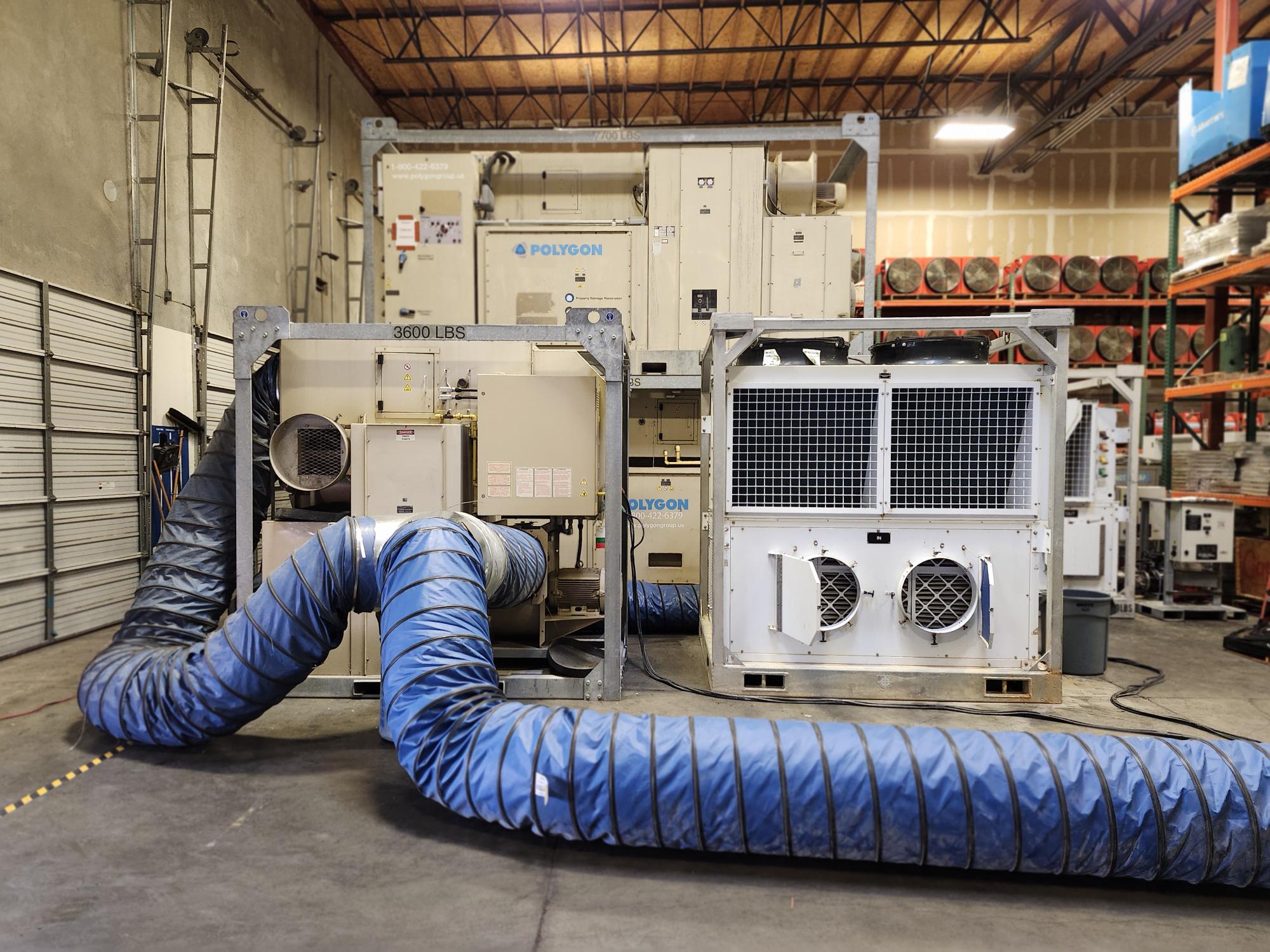
In more demanding applications, these systems are combined with additional air handling strategies to maintain extremely dry conditions over time.
In high-purity compressed air systems, performance is often measured in terms
of moisture content, sometimes expressed as very low water concentrations in the air supply. Achieving these levels requires tightly controlled, continuously operating systems.
However, drying equipment alone is not enough. Continuous monitoring of dew point, temperature, and humidity verifies that systems are performing as intended and provides early warning if conditions begin to drift outside acceptable limits.
Why Low Dew Point Is Difficult to Maintain
Maintaining a low dew point environment is challenging because moisture is constantly reintroduced into controlled industrial spaces. Water vapor is always present in ambient air and can enter through small gaps, seals, and porous materials, while equipment and building materials can also release stored moisture over time. In addition, differences between indoor and outdoor air create pressure-driven infiltration, often requiring controlled airflow or positive pressure systems to maintain stability.
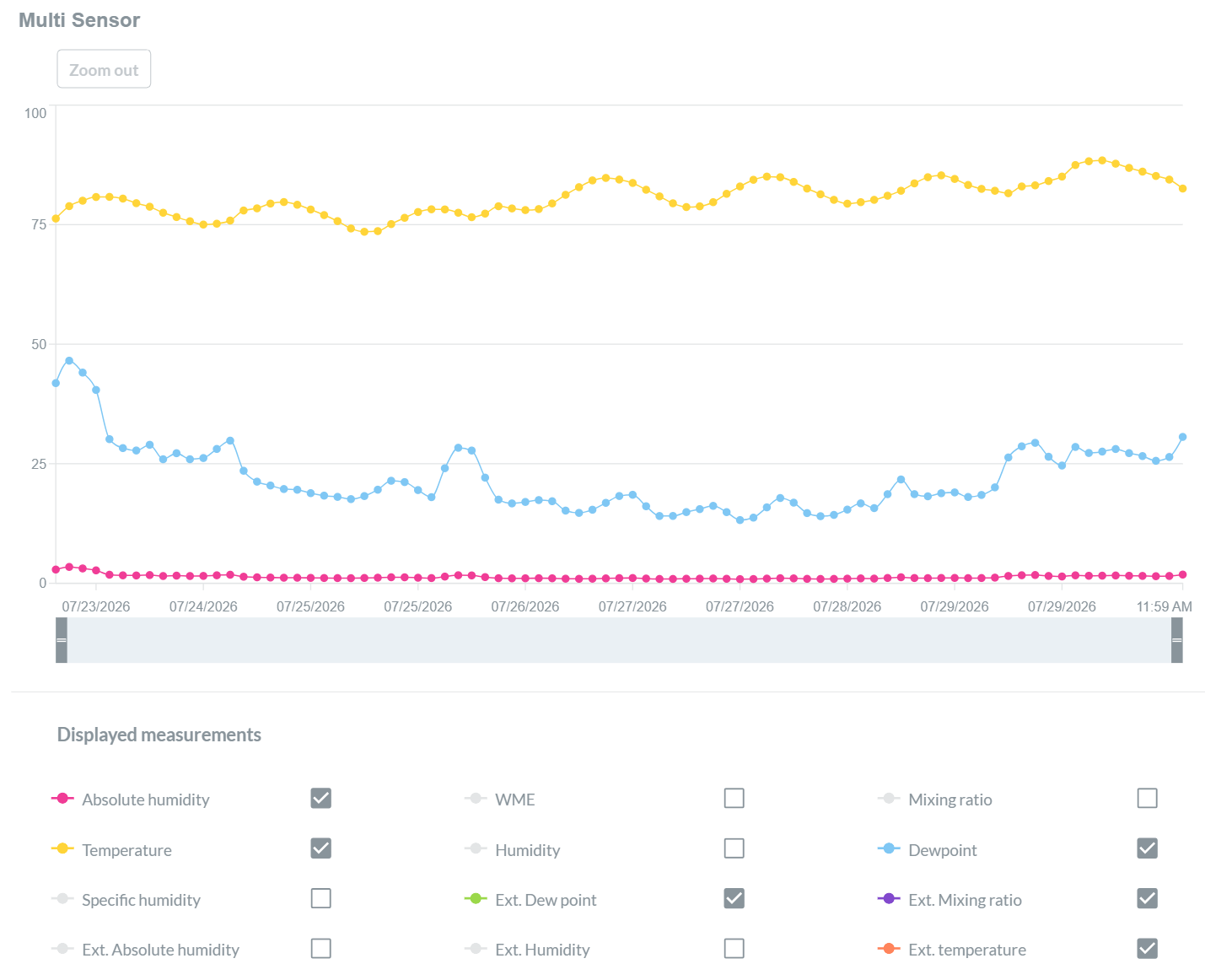
For this reason, continuous monitoring is essential. Real-time sensors can detect changes in dew point and environmental conditions, allowing operators to respond before moisture impacts equipment, materials, or production. Historical data also helps identify recurring issues and optimize system performance over time.
Energy consumption is another significant obstacle. Removing moisture to achieve dew points of -40°F (-40°C) or lower requires specialized, intensive drying technologies that might operate continuously unless outfitted with smart controls that can automatically respond to real-time sensor data. Standard HVAC systems are typically unable to reach or maintain these conditions on their own, making desiccant dehumidification, advanced air handling systems, and continuous monitoring essential.
Polygon’s Digital Solutions (DSP) provides the real-time monitoring to alert stakeholders when conditions are degrading and systems should be checked. The DSP also provides live dashboards and scheduled reporting providing a single point of truth needed for reporting and regulatory compliance.
Low dew point environments are essential in precision manufacturing, and they require more than dehumidification alone. Ongoing moisture infiltration and environmental variability make maintaining stable conditions a continuous, system-wide challenge.
Effective control depends on an integrated approach that combines drying technology, airflow management, system design, and continuous monitoring. Together, these elements help manufacturers maintain stable low dew point environments while improving reliability, product quality, and operational efficiency.
Many advanced manufacturing environments require dew points below -40°F (-40°C) to maintain product quality.

Emergency Support
1-800-422-6379Send an email
us_info@polygongroup.com24/7 Hotline
Urgent equipment and operational support
Property damage
Documents and contents damage
24/7 Emergency:
United States: 1-800-422-6379
Canada: 1-888-702-4782
Your questions and comments are important to us. Please send us your information with a description of your needs and we will connect with you promptly.
Polygon US Headquarters
15 Sharpners Pond Road, Building F North Andover, MA 01845
Phone: 1-800-422-6379
See all our US locations here: Polygon US office locations
For global support, please contact one of our offices listed here: Our Global offices - Polygon Group