Notice
You are now leaving Polygon Restoration's website and will be directed to another country in the group.
Do you want to proceed?
Notice
You are now leaving Polygon Restoration's website and will be directed to another country in the group.
Do you want to proceed?
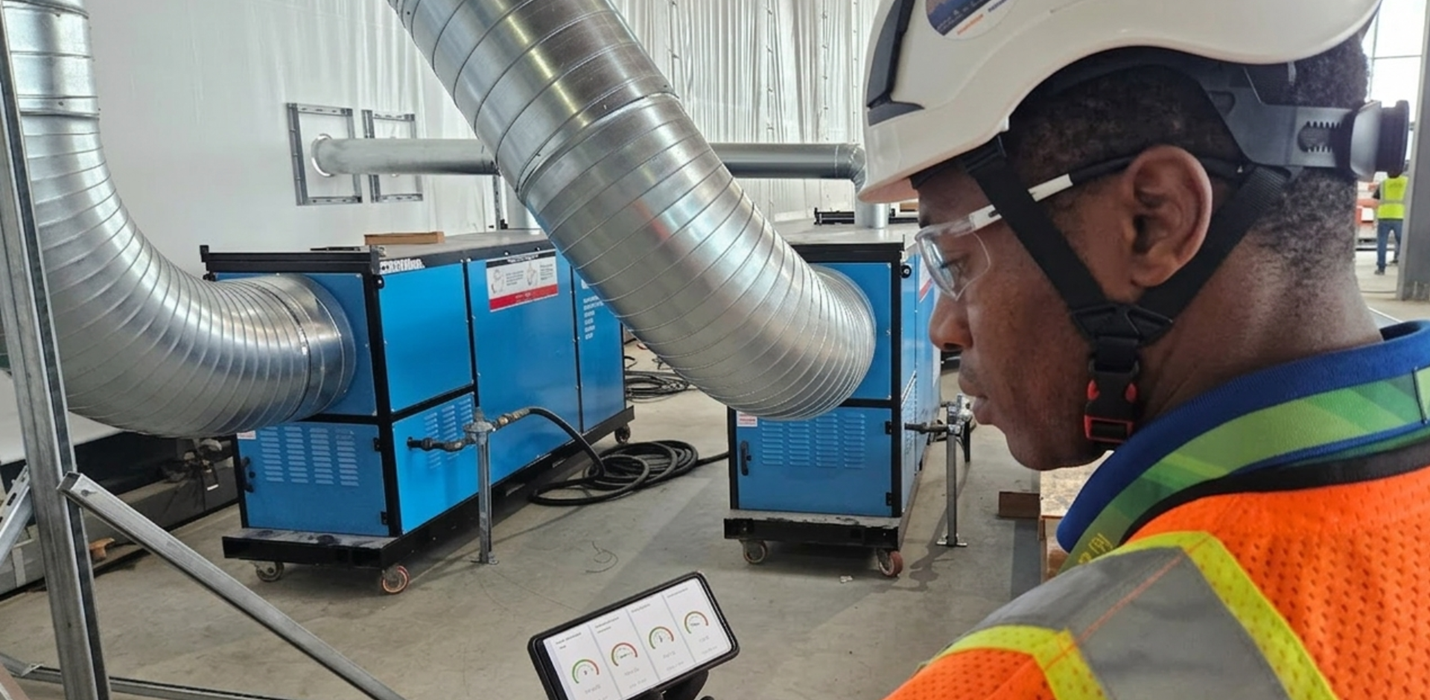
As cold weather approaches and projects begin to close in, temporary heat becomes essential for keeping schedules on track and protecting materials. At the same time, enclosed spaces increase the risk of carbon monoxide (CO) exposure when fuel-burning heaters are used indoors. Understanding how CO is generated and how to monitor conditions is critical for maintaining safe environments during winter operations.
Carbon monoxide is a colorless, odorless, and tasteless gas that can cause serious illness or death when inhaled. Because it cannot be detected by human senses, it is often referred to as the silent killer. CO prevents the blood from carrying oxygen effectively, which means symptoms can escalate quickly even at moderate concentrations.
Each year in the United States, thousands of people are treated for accidental CO exposure, with many incidents tied to fuel-burning equipment operating in enclosed or poorly ventilated spaces. On jobsites, the risk increases as buildings are sealed, temporary enclosures are installed, and fresh air exchange is reduced.
Many temporary heaters rely on combustion, which naturally produces carbon monoxide as a byproduct. Heaters that burn propane, diesel, kerosene, or natural gas can allow CO to build up indoors if exhaust gases are not properly vented outside.
The type of heater being used also matters. Direct-fired heaters release combustion byproducts directly into the heated air stream, increasing CO exposure risk in enclosed spaces. Indirect-fired systems, on the other hand, separate the combustion process from the air being delivered and vent exhaust outdoors, significantly reducing the potential for indoor CO buildup. Engineered indirect heat solutions are better suited for enclosed or occupied environments where indoor air quality is a concern. Read more about the difference between direct and indirect heaters here.
Because CO cannot be seen or smelled, monitoring is one of the most effective ways to manage risk. Continuous CO sensors provide real-time visibility into conditions and alert teams before levels become dangerous. Monitoring helps verify that heaters are operating correctly, ventilation is adequate, and conditions remain safe as spaces evolve throughout the project.
Real-time data also allows teams to respond proactively rather than relying on symptoms as a warning sign, which may already indicate harmful exposure.
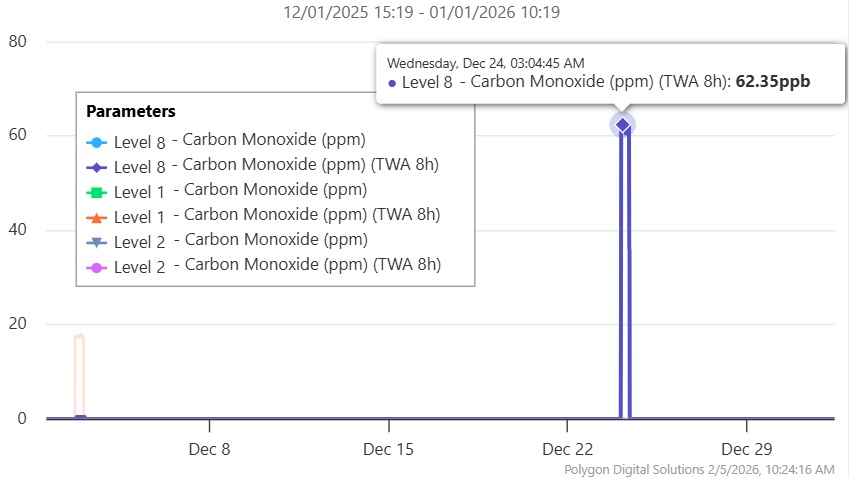
This chart shows a CO spike, the monitor triggers an automated alert to ensure immediate site evacuation or ventilation.
To reduce the risk of CO exposure, electric heaters should be used, as they do not produce carbon monoxide. When combustion heaters are required, they should be rated for indoor use and designed with proper exhaust venting or indirect heat configurations. Equipment should be inspected regularly, with flues, vents, and exhaust pathways checked for blockages or leaks, especially during extended winter use. Actively monitoring and alerting on CO levels regarless of equipment and equipment configuration is always a good preventative measure.
If anyone experiences headache, dizziness, nausea, confusion, fatigue, or shortness of breath while heaters are operating, the heater should be shut off immediately and the space ventilated. Move to fresh air right away and contact emergency services if symptoms are severe or persistent.
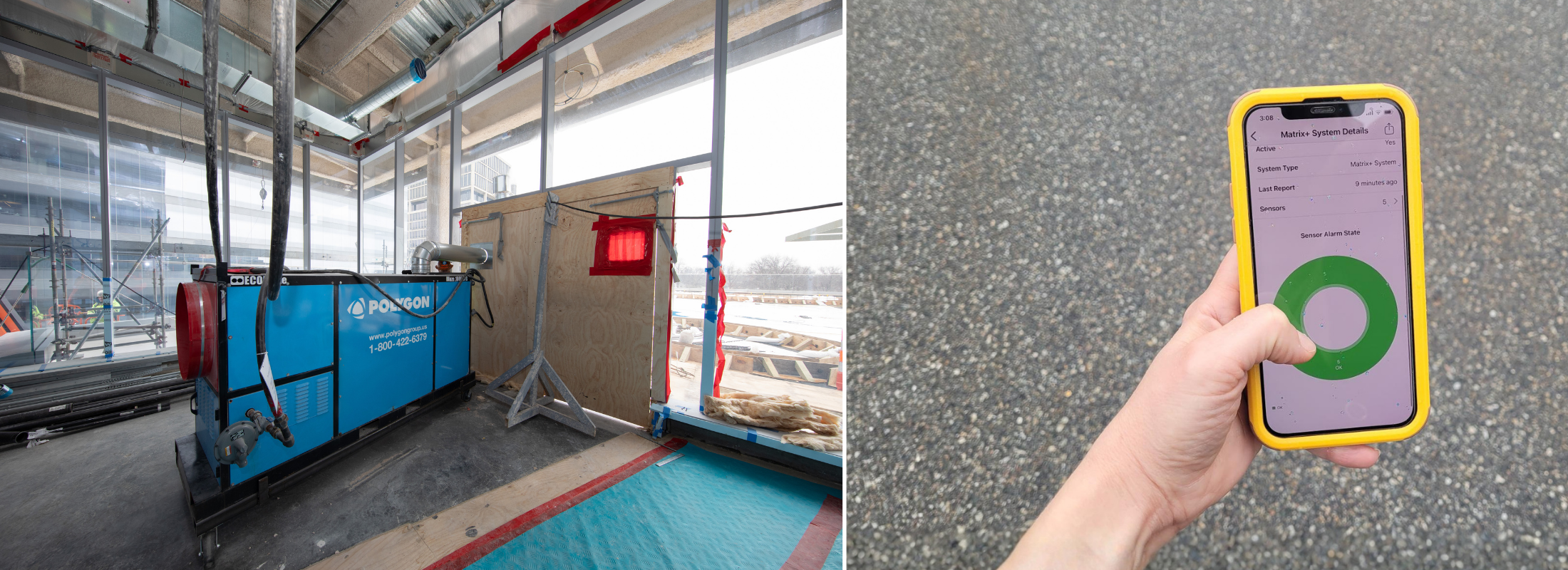
Temporary heat is often unavoidable, but unsafe conditions are not. As buildings close in for winter, choosing the right heating approach and pairing it with continuous CO monitoring helps protect people, productivity, and project timelines. Proactive planning, proper equipment selection, and real-time data are key to maintaining safe indoor environments throughout the heating season.
For questions about temporary heating options or 24/7 CO monitoring solutions, reach out to Polygon to discuss the safest approach for your space.

Emergency Support
1-800-422-6379Send an email
us_info@polygongroup.com24/7 Hotline
Urgent equipment and operational support
Property damage
Documents and contents damage
24/7 Emergency:
United States: 1-800-422-6379
Canada: 1-888-702-4782
Your questions and comments are important to us. Please send us your information with a description of your needs and we will connect with you promptly.
Polygon US Headquarters
15 Sharpners Pond Road, Building F North Andover, MA 01845
Phone: 1-800-422-6379
See all our US locations here: Polygon US office locations
For global support, please contact one of our offices listed here: Our Global offices - Polygon Group