Notice
You are now leaving Polygon Restoration's website and will be directed to another country in the group.
Do you want to proceed?
Notice
You are now leaving Polygon Restoration's website and will be directed to another country in the group.
Do you want to proceed?
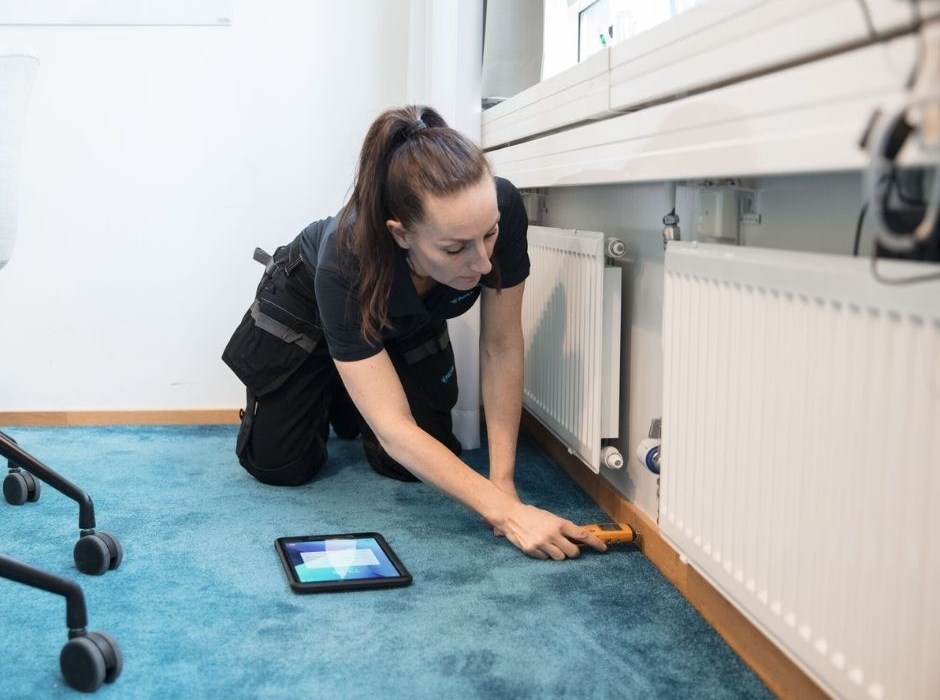
Preventive maintenance goes a long way. Knowing how to bleed your radiators is one of the quickest, most effective ways to boost your heating efficiency, extend your boiler’s lifespan, and significantly cut down your energy expenses.
Ignoring this simple task can cause significant trouble for you and your home: think uneven heating, increased risk of rust and leaks, and unnecessary wear and tear on your central heating system.
In this guide, we will walk you through why bleeding radiators matters, how to spot the signs of trapped air, and the straightforward steps to resolve the issue.
If your gas central heating isn't warming your home effectively, chances are there's air trapped inside the system. This is when a bleed is needed. Air bubbles restrict the proper flow of hot water, leading to radiators that are cold at the top and rooms that take far too long to heat up.
This uneven heat distribution isn't just uncomfortable; it can also contribute to issues like condensation and damp in your home.
Before you grab your radiator key, you need to properly assess the system to confirm if a bleed is necessary and to check for more serious problems.
Activate Your System: Turn on your central heating. Ensure every Thermostatic Radiator Valve (TRV) is fully open (on its highest setting).
Unblock TRVs: Check that no TRVs are covered by curtains or furniture. TRVs rely on sensing the ambient air temperature, and blockage will compromise their function. The TRV is usually located at the top or bottom corner of the radiator.
Perform the Temperature Check (Wear Gloves!): Once the system has warmed up, check the temperature of each radiator. Since air rises, if the top section of a radiator is significantly cooler than the bottom, you have trapped air and need to bleed it.
Before proceeding, do a quick visual check for leaks:
Radiator Health: Look for rust or any pooling water underneath or on the radiator itself.
Boiler Status: Confirm the boiler power or pilot light is on, the pressure gauge is at the correct level, and there are no visible leaks from the unit.
If everything else looks fine, bleeding the radiators should dramatically improve your heating performance.
This process is quick, simple, and requires minimal tools.
Turn off your central heating completely. This is non-negotiable, as performing the procedure while the heating is on could result in scalding hot water spraying out.
You'll need three simple items:
A radiator key (widely available and inexpensive at hardware stores).
A dry cloth (like a tea towel).
A bowl or small container to catch any water.
Find the square bleed screw, typically positioned at one of the top corners of your radiator. Place your bowl directly underneath this screw.
Place the radiator key snugly over the bleed screw. Cover the immediate area with your cloth and slowly turn the key counterclockwise by about a half-turn. You will immediately hear a distinctive hissing sound as the trapped air escapes. Keep the cloth close to the valve opening.
Once the hissing stops and water begins to trickle out, immediately tighten the screw again (clockwise). Be careful not to use excessive force; over-tightening can damage the valve. Wipe down the area thoroughly to prevent any residual moisture from causing rust.
Turn the heating back on. Now you must check the boiler pressure. If the pressure has dropped below the recommended level, use the filling loop (usually a tap or lever on the boiler’s main water supply) to boost it back up. Confirm that all radiators are heating evenly and that none of the valves are leaking. You may need to repeat the process on some radiators. If the issue persists, it's time to call in a Gas Safe-registered heating professional.
More than half of your utility bill often goes toward heating and hot water. While bleeding your radiators is crucial, here are other quick steps to maximise savings:
Year-Round Boiler Use: Don't let your boiler sit idle for months. Turning it on for 10–15 minutes once a month, even in spring and summer, can prevent component seizing and keep it in good working order.
Monitor for Warning Signs: Don't ignore persistent issues. If the boiler pressure frequently drops, or if you spot leaks or pooling water, call a certified professional immediately.
Annual Service & Smart Controls: A yearly boiler service helps preempt costly breakdowns. Installing a thermostat and setting the boiler to an optimum temperature (e.g., 60°C) can generate significant yearly savings.
Upgrade Insulation: Invest in proper insulation. Loft insulation is a top performer for savings. Additionally, draught-proofing windows and doors is a low-cost measure that stops heat escaping and slashes your gas usage.
Insulate Your Hot Water Cylinder: If you have a standard (non-condensing) boiler, fitting an insulation jacket to the hot water cylinder is cheap and drastically reduces heat loss.
If you think you might have a leak anywhere in your home, reach out to Polygon on 0330 332 2958 or email uk_leakdetectionsales@polygongroup.com for non-destructive leak detection.

Emergency call 24hr service
01480 442327Send message
uk_sales@polygongroup.comDirect Reaction Team
We are ready to respond on short notice to ensure that real estate and other property restored to its origins in the fastest possible way. We do a quick assessment of the damage to be able to take the right actions.
Your questions and comments are important to us. Select a topic and fill in the contact form. We´ve everything covered for your needs!
Polygon UK
Blackstone Road, Huntingdon, Cambridgeshire, PE29 6EE
Phone: 01480 442327
Email: uk_sales@polygongroup.com